

How Trailstone 2x'd Their Close Rate by Rebuilding Around Trust
May 21st, 2026
8 min. read
By Mark Rodgers
Most companies, when they get a bad review, either ignore it or try to bury it.
The instinct makes sense. Protect the brand, minimize the damage, move the conversation offline. Nobody wants to draw more attention to the thing that makes them look bad.
Trailstone Insurance did the opposite.
Mark Rodgers founded Trailstone Insurance in 2013 as a scratch agency out of Colorado. Just him, a core value of treating people the way you want to be treated, and a belief that independent agents could out-serve the State Farms of the world by actually caring.
By 2019, they had seven people. Today, they're approaching 70, operating across seven states, with a studio in their office, a full content production system, and a website they rebuilt from the ground up in 2024.
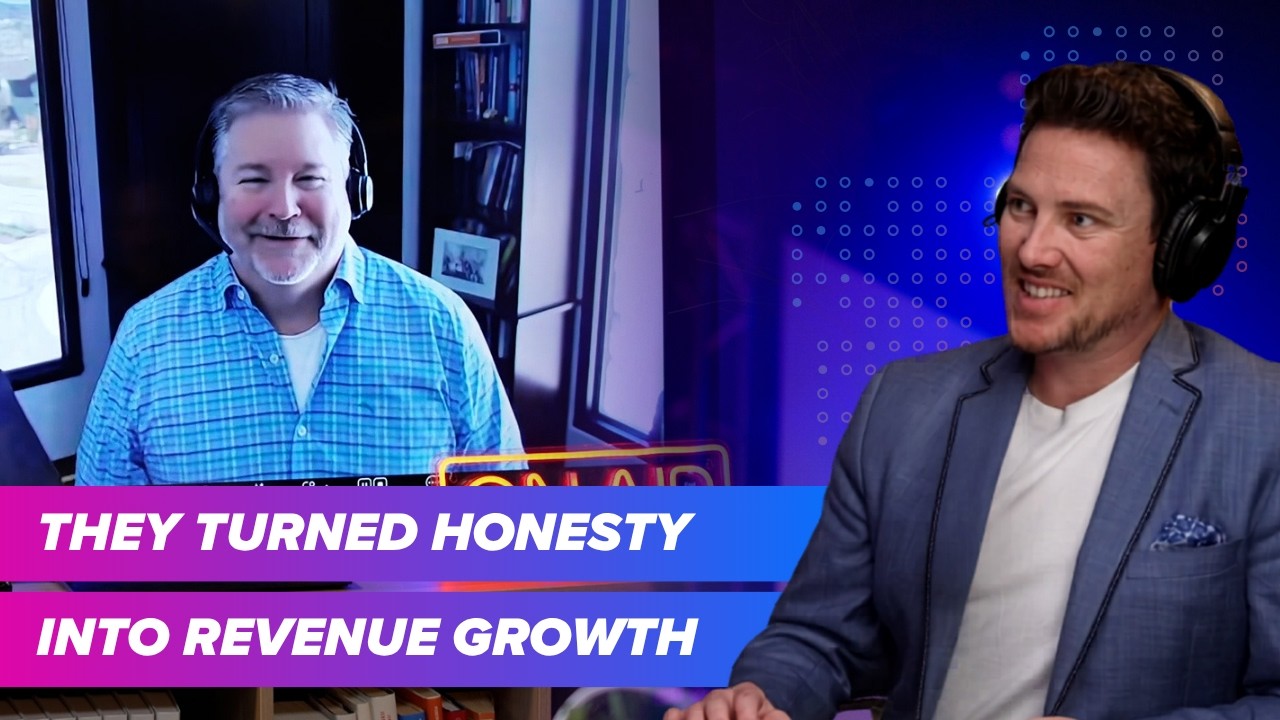
When Marquece Cunningham joined as Marketing Director in June 2025, he brought nearly 20 years of marketing experience and about 300 websites' worth of perspective. And one of the first things they did together was publish a video where they read their own one-star reviews out loud.
I sat down with both of them to hear how that decision came about, what it took to actually pull it off inside a growing insurance agency, and what they've seen since they started doing content that most companies in their industry won't touch.
It's a story about trust. But it's also a story about what happens when leadership commits to something all the way.
Putting the company's core values into action
Mark first came across They Ask, You Answer (now Endless Customers) on a road trip in 2020. He listened to the book, then read it, then got obsessed with it. The reason it resonated wasn't complicated.
"One of our core values is heart of a teacher," he told me. "All we're doing is educating people, helping people understand more about insurance. They ask, you answer resonates with that."
But getting the rest of the company there took longer. Some of the leadership at the time just wanted to spend money on advertising. Mark pushed back. The clients Trailstone was after, homeowners and business owners looking for real coverage guidance, those people want to be educated. They don't want to be chased through a funnel.
It took about a year and a half for the attitudes to shift as the leadership team evolved. Today, they hold quarterly Alignment Days modeled on the ones IMPACT runs internally. They track which team members have read the book. They even bake video willingness into the hiring process.
"We're a media company," Mark said. "We're a technology company. And we're trying to build more trust through that."
What makes video so powerful in the insurance industry
Trailstone's whole content philosophy is built around transparency. And Marquece, as the person driving the content day-to-day, believed that meant doing things their industry wouldn't do.
"We don't see a lot of transparency in insurance," he said. "We want people to know there are real humans behind the brand. Part of that is saying things on camera that a lot of people aren't willing to say."
One of their core operating principles, embedded in what they call their Trust OS, is being efficient, being human, and being accountable.
This led to one of the most transparent videos a business could make: tackling one-star reviews face-to-face.
They explained what happened, where they messed up, and what they were doing to make it right.
"If something comes through that isn't a good reflection of our agency, we want to be able to address it," Marquece said. "Not sweep it under the rug like a lot of companies will do."
I've talked about the ostrich effect on this show before. That impulse to stick your head in the sand when a bad review shows up because everything has to be five stars or nothing. Mark actually laughed when I brought it up, because he's seen it everywhere.
But avoiding those hard conversations doesn't protect your brand. It breaks trust. It tells buyers you're more interested in appearances than honesty.
Trailstone went the other direction. And the result is content that no competitor in their market is making.
How do you get the team comfortable on camera?
This is where the conversation got really practical, because video willingness doesn't just happen. You have to build systems around it.
Mark was honest that they're still navigating this. About 20 percent of the team will probably never be fully comfortable on camera. But instead of fighting that, they've built a structure that makes it easier for the people who can do it and screens for it during hiring.
"As part of our hiring process, we send prospective employees a video assignment," he explained. "Then their next step, if they want to continue, is to record 90 seconds on their cell phone. Who are you? Why do you want to work at Trailstone? About 40 percent of candidates are too scared to do that. And now we're screening out the people who won't come on board and get on camera."
For the people already on the team, they've built a scheduling system where scripts are loaded in advance. At any given time, there are five to ten scripts ready to go. People can book time in the studio, read the script beforehand, and practice at their own pace.
The expectation is set clearly: not everyone will be on camera 100 percent of the time, but it's part of the job.
They also share blooper reels.
"It humanizes what we do," Marquece said. "I've been on video a lot, and I still fumble over words. Being able to share those moments with the team shows them it's okay."
Mark's advice for anyone trying to get people in front of a camera for the first time: give them grace. Let them mess up. Tell them they did a great job, even when it wasn't perfect. The editors can clean up a lot. What matters is building the habit.
What happens when you rebuild your website around trust, instead of leads
Before working with IMPACT, Trailstone had a different website provider. The conversation there was always SEO, SEO, SEO. Lead generation. Get them into the funnel. It wasn't cheap, and it didn't perform.
"It didn't live up to our values," Mark said. "It didn't live up to the four pillars of trust or our core values. And it didn't work."
Working with IMPACT's coaching team, specifically their coach Janet, they rebuilt the site on HubSpot with a different approach.
Before a single page was written, they spent hours in conversation: what matters to you, what values do you want to project, and how do you actually operate with your customers. The website became a representation of that.
The project was significant. Over 160 pages, every one of them touched. They rewrote copy, worked through alt tags, schema, images, and back-end structure. Mark, Marquece, and their sales director Ken would lock themselves in a room for four or five hours at a time, working through it.
They launched one week late. For a project of that scope, Marquece, who has built close to 300 websites across his career, called that a big feat.
They also set out to produce 34 website videos for the launch. They got three or four live. Mark didn't see that as a failure.
"Perfect is the enemy of growth," he said. "If we had waited to launch perfectly, we probably wouldn't have gone live until a month ago."
They launched anyway and kept building. Today, they have bio videos in development for roughly 50 to 60 team members on the U.S. side of the agency, with the goal of letting people feel like they already know someone before they ever pick up the phone.
How website updates brought in more AI search traffic
When they changed their domain from Trailstone Insurance Group to just Trailstone Insurance, traffic fell off about 40 percent initially. That's just the reality of a domain switch, and they knew going in that it would take time to recover. Now, the volume is back to where it was before.
But what caught Mark's attention was something different.
"The first week Janet produced a report showing AI traffic, I literally almost cried," he told me. "I could see the search string in ChatGPT. I could see what web page they clicked on, how long they were there. Then they clicked the form to get help. And then we reached out 20 minutes later and closed them about a week later."
That last part is worth noting: Trailstone typically closes clients 10 to 14 days after first contact. The AI-referred visitors were landing, reading, trusting what they found, and converting. The volume isn't huge yet. But the quality is different.
"The leads coming in now are so much better," their sales director told Mark. "They're coming in pre-qualified. These customers are closing at about double the rate of what we were seeing before."
That's the payoff of building a website around trust and education instead of lead capture.
Finding time to invest in what brings about the most change
The most useful part of the conversation, for me, was when Mark and Marquece talked candidly about the failure modes they've seen from other businesses trying to implement Endless Customers.
Mark has personally introduced the system to about ten other insurance agencies. Most of them read the book, get excited, maybe update a blog post or two, and then stop.
"It's a lot of words but not a lot of action," he said. "And even if the actions are micro steps, they need to be taken."
Trailstone avoided that trap because Mark treated implementation the same way he'd learned to treat EOS, which the agency also runs on. When they tried to self-implement EOS, they ended up doing maybe three of the six components and convinced themselves they were doing great. It wasn't working.
"Hire an implementer," he said. "It's going to cost you money. But you're going to get way ahead. The same goes for Endless Customers. You've got to do all of it."
Marquece put it a different way. The system works when you commit to it. What trips companies up is the slow drift: they're doing it in Q1, something gets busy in Q2, and by Q3, they've fallen off without realizing it.
Having a coach, an implementer, or someone looking at the work from outside gives you the accountability to catch that before it compounds.
"We tell ourselves stories," Mark said. "Hallucinations of what we're doing. You need someone who can see clearly what you're actually doing and what you're not."
What's next for Trailstone Insurance?
Mark and Marquece were candid that the company is in a period of active reassessment. Independent insurance agents can't compete on price because they don't set price. Customers increasingly want to know their cost before they pick up the phone. And the 25-minute quoting process that Trailstone currently runs isn't what buyers expect in 2026.
The next phase involves leaning into AI in a more deliberate way, building tools that can deliver what customers are looking for before they ever reach out. They've been experimenting with AI-assisted tools and are now looking at bringing in a developer to handle the backend work their team can't do internally.
Their longer-term vision is even bigger. The goal? A content-driven media company built to serve other verticals: insurance, mortgage, and loan officers, under the same trust-first model. It would run on the same content machine they've built at Trailstone and scale it out nationally.
"Content is at the forefront of everything we do here," Marquece said. "And being able to do that across other verticals, the sky's the limit."
What I kept coming back to is that none of this would be possible if they hadn't done the foundational work first. The website. The videos. The reviews. The quarterly alignment days. Those aren't just tactics. They're what the whole expansion is built on.
How to make the most of your Endless Customers journey
Marquece's advice for anyone starting out with Endless Customers was simple and direct: stick with it, because it's iterative. Mark has reread the book four or five times since Marquece joined and keeps pulling new ideas out of it.
The framework works when you follow it. The biggest variable is whether you actually commit.
Mark added something that applies well beyond insurance. When they tried to do EOS halfway, they got halfway results. The same is true of any system worth following.
Trailstone isn't a perfect company. They launched a website with four videos instead of 34. Half of their team still hasn't read the book. Some people will never fully embrace being on camera.
But they launched, they kept going, and they're building something that most agencies in their market aren't even trying to build.
That's what the work looks like in practice.
If what Mark and Marquece are building at Trailstone Insurance resonates with you, talk to the team at IMPACT about how to get started with Endless Customers in your own business.
Topics:
