



What Is Sola Wind and Hail Insurance, and How Can It Help Cover Your Deductible?
April 14th, 2026
9 min. read
By Mark Rodgers
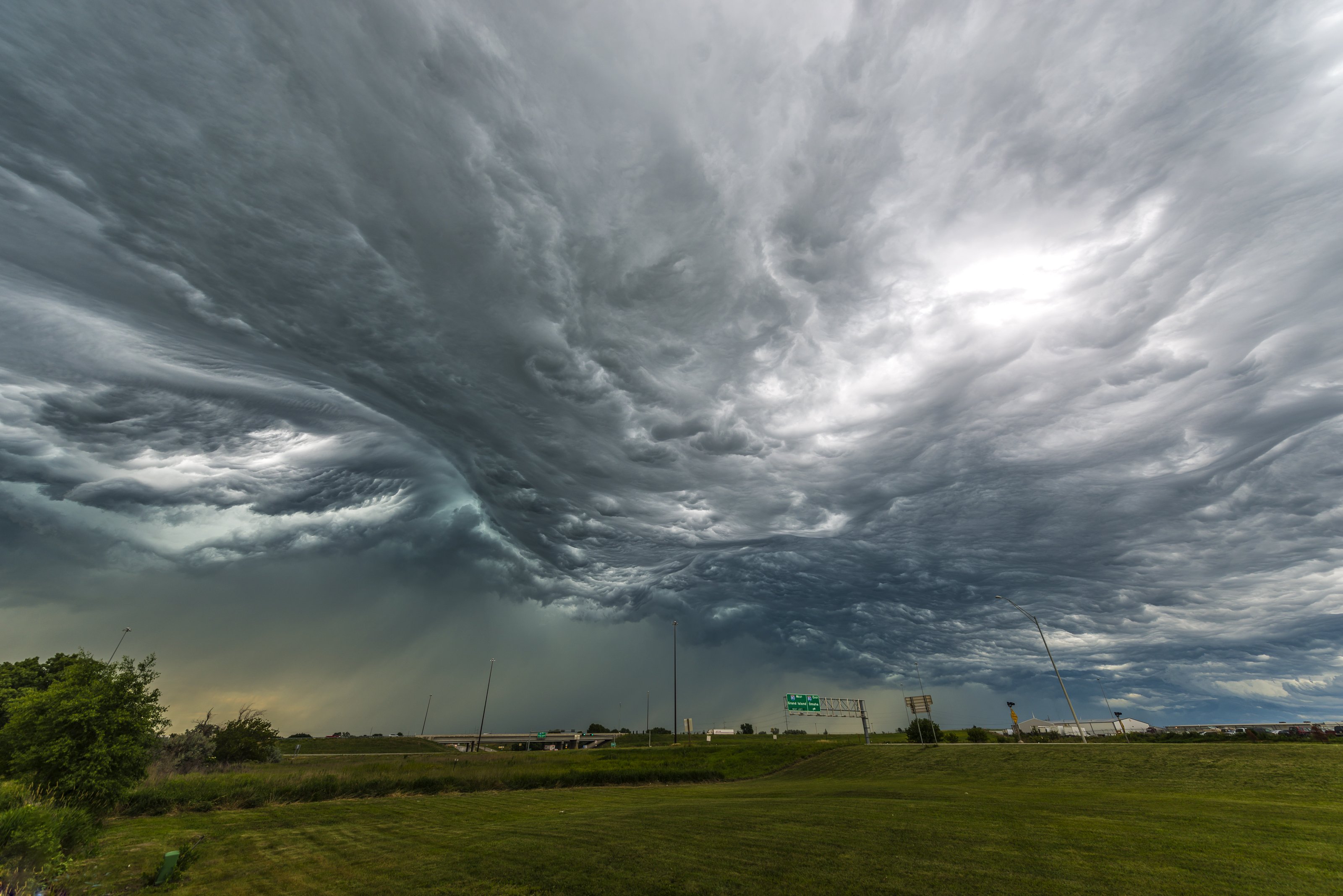
If you own a home in Colorado, Kansas, or just about anywhere in the central United States, you already know what a bad hailstorm can do to a roof. What you may not know is how much of that bill you are now expected to cover yourself before your homeowners insurance pays a single dollar.
Wind and hail deductibles have been climbing for years. Many Colorado homeowners now carry a 1 percent or 2 percent deductible based on the dwelling coverage amount on their policy. On a home insured for $500,000, a 2 percent wind and hail deductible means $10,000 out of pocket before the carrier picks up the rest. On a $750,000 home, that figure jumps to $15,000. Those are real numbers that catch people off guard every storm season.
That is exactly why Trailstone Insurance Group started offering Sola wind and hail insurance to our clients in Colorado and Kansas. Sola is a standalone, supplemental policy designed to help offset those large out-of-pocket deductible costs when a qualifying wind, hail, or tornado event hits your area. In the first two weeks after adding Sola to our agency, we placed 18 policies with the carrier, which tells us homeowners have been looking for exactly this kind of solution.
This post will walk you through what Sola covers, how the claims process works, what qualifies as a covered event, and how to decide if it makes sense for your home.
Why Wind and Hail Deductibles Have Gotten So High
To understand why a product like Sola exists, it helps to understand what has been happening in the homeowners insurance market over the past several years.
Colorado ranks second in the nation for hail insurance claims, behind only Texas. According to the Colorado Division of Insurance, hail accounts for an average of 26 to 54 percent of the total homeowner insurance premium across the state, depending on the county. Along the Front Range and into the Eastern Plains, hail makes up roughly 50 percent of what homeowners pay in premium. That is not a typo. Half of your homeowners premium in many Colorado zip codes goes toward hail risk alone.
Colorado currently holds the fourth highest average homeowners premium in the country at approximately $4,600 per year, a figure that has risen roughly 58 percent since 2018. Insurance carriers have responded to the rising cost of hail claims by increasing deductibles, tightening underwriting, and in some cases pulling back from writing new policies in the hardest hit areas.
The result is a market where many homeowners now carry percentage-based wind and hail deductibles instead of the flat $1,000 or $2,500 deductibles that were common a decade ago. A 1 percent deductible on a $400,000 home is $4,000. A 2 percent deductible on a $600,000 home is $12,000. Those are the kinds of numbers that can turn a hailstorm into a real financial problem, even for homeowners who have insurance.
Kansas faces a similar situation. Severe convective storms are a regular part of life across the Great Plains, and carriers writing policies in those areas have adjusted their deductible structures in much the same way.
This is the gap Sola was built to fill.
What Sola Wind and Hail Insurance Actually Is
Sola is a supplemental insurance policy that covers wind, hail, and tornado events. It does not replace your homeowners insurance. It works alongside it.
Think of it this way. Your homeowners policy covers wind and hail damage, but it comes with a deductible you must pay first. Sola is designed to help cover that deductible and other out-of-pocket costs so the financial hit after a storm is smaller.
Sola uses what the insurance industry calls a parametric model. In plain English, that means the payout is triggered by objective weather data rather than a traditional adjuster inspection. Sola monitors National Weather Service and NOAA data around the clock. When a qualifying storm hits your area, the system identifies it. You submit photos of the damage, Sola confirms the weather data, and you receive a payout, typically within 7 to 10 days by direct deposit.
There is no traditional adjuster coming to your home. There are no contractor quotes required. There are no receipts to submit. The payout is yours to use however you choose, whether that is covering your homeowners deductible, paying for repairs, or handling other storm-related expenses.
Here is a quick comparison to help illustrate the difference between your homeowners policy and a Sola policy when it comes to a wind or hail event:
Your homeowners policy requires you to pay the deductible first (often thousands of dollars), then file a claim, wait for an adjuster, negotiate depreciation, and eventually receive a check. That claim goes on your CLUE report, which is the claims history database that carriers check when deciding whether to renew your policy and at what price.
With Sola, the payout is based on verified weather data. There is no deductible on the Sola policy itself. The claim is not reported to CLUE. Your homeowners premiums will not increase because of a Sola claim. And in many cases, a Sola payout can help you avoid filing a homeowners claim altogether, which protects your claims history for the long term.
How Sola Payouts Work
Sola offers coverage limits ranging from $2,000 up to $25,000 per policy. The payout you receive depends on the type of event and its severity.
For wind and tornado events on a $25,000 policy limit, payouts are tiered based on wind speed and the Enhanced Fujita (EF) scale:
| Wind Speed | EF Scale | Payout (on a $25,000 policy) |
|---|---|---|
| 86 to 110 mph | EF0 and EF1 | $3,000 |
| 111 to 135 mph | EF2 | $5,000 |
| 136 to 165 mph | EF3 | $10,000 |
| 165 to 200 mph | EF4 | $15,000 |
| 200+ mph | EF5 | $25,000 |
For hail events, there are no wind-speed tiers. Sola uses a hail score calculated from National Weather Service data that measures both the size of the hail and how long it impacted the area. A score of 65 percent or higher triggers a payout at your full selected policy limit.
You are also eligible for up to two payouts per policy term. After a payout, there is a 30-day waiting period before coverage resets. That means if a second qualifying storm hits later in the year, you can receive a second payout.
The Claims Process, Step by Step
One of the things that sets Sola apart is how simple the claims process is. Here is how it works:
Step 1: Check for damage. After a wind, hail, or tornado event, look for visible damage to your home, such as roof damage, broken windows, or leaks. If conditions are unsafe, wait until it is safe to inspect.
Step 2: File your claim. Log in to the Sola Policyholder Portal at solainsurance.com and click "File Claim." You will provide the event type, event date, a brief description, and photos of the damage. You can also file through the website chatbox or through your Trailstone agent.
Step 3: Sola verifies the storm data. Sola cross-references your claim with National Weather Service data to confirm storm activity in your area. Weather data can take some time to be officially released, and Sola will keep you updated throughout the process.
Step 4: Receive your payout. Once the claim is approved, funds are deposited directly into your bank account. Most payouts arrive within approximately 7 to 10 days of a qualifying event.
No adjuster. No contractor estimate. No receipts. No CLUE report hit.
Who Can Get a Sola Policy
Sola covers a wide range of property types, not just traditional single-family homes. Eligible properties include:
Residential homes (site-built), manufactured and mobile homes, landlord and rental properties (both long-term and short-term), vacation and second homes, vacant properties, farms, HOA properties, apartments, churches, retirement homes, and tiny homes.
One important note: each Sola policy must be issued in the name of an individual. Sola does not write policies under the name of an LLC or corporation. If you own rental properties through an LLC, the policy would still need to be in your personal name.
If you are unsure whether your property qualifies, you can send a photo to our team and we will confirm eligibility with Sola's underwriting department.
Where Sola Is Available
Sola's wind and hail policy is currently available in Arkansas, Colorado, Georgia, Indiana, Iowa, Kansas, Kentucky, Missouri, Ohio, Oklahoma, Tennessee, and Texas. At Trailstone, we are currently writing Sola policies for our clients in Colorado and Kansas.
The Deductible Strategy: How Sola Can Actually Save You Money
Here is a strategy that has been working well for our clients, and it is one of the reasons those first 18 policies moved so quickly.
If your homeowners policy currently has a 1 percent wind and hail deductible, you may be able to increase it to 2 percent and generate meaningful premium savings on your homeowners policy. You can then apply some or all of those savings toward a Sola policy.
In many cases, this approach improves your overall coverage position and reduces your total annual cost. You end up with a lower homeowners premium, a Sola policy that covers the higher deductible, and a fast payout process that does not touch your claims history.
Imagine two families on the same street. Both have homes insured for $500,000. Both get hit by the same hailstorm.
Family A has a 1 percent wind and hail deductible ($5,000) and no Sola policy. They file a homeowners claim, pay the $5,000 deductible, wait weeks for an adjuster, deal with depreciation holdback, and now have a hail claim on their CLUE report. At renewal, their carrier may increase their premium or choose not to renew.
Family B increased their deductible to 2 percent ($10,000), saved several hundred dollars on their annual homeowners premium, and used part of that savings to purchase a Sola policy. After the same storm, Sola verifies the weather data, and Family B receives a payout within about a week by direct deposit. They use the payout to cover repair costs. They do not file a homeowners claim. Their CLUE report stays clean. Their homeowners premium stays the same at renewal.
Family B came out ahead financially and kept their insurance record clean. That is the deductible strategy in action.
Who Is Behind Sola, and Is It Financially Stable?
This is a fair question, especially for a newer carrier. Here is what we know.
Sola was founded in 2022 and is headquartered in Atlanta. The company grew out of Georgia Tech's InVenture Prize competition and later went through the Lloyd's Lab accelerator program, which is run by Lloyd's of London. Sola is a Lloyd's of London coverholder, meaning its policies are backed by AM Best A-rated reinsurance carriers through Lloyd's, which is the world's oldest and most recognized marketplace for specialty insurance.
In August 2025, Sola closed an $8 million Series A funding round led by FINTOP Capital and JAM FINTOP, bringing total funding to $11.7 million. Since its seed round, the company has grown revenue sevenfold and now partners with thousands of agencies across multiple states.
Sola's pricing is based on over 40 years of ZIP-level hail and wind data, and the company uses county-level limits to avoid concentrating too much risk in any single area. This is a disciplined, data-driven approach to underwriting, which is one of the reasons we felt comfortable recommending it to our clients.
Common Questions About Sola
Q: Does Sola replace my homeowners insurance? A: No. Sola is a standalone, supplemental policy. It works alongside your existing homeowners insurance to help cover your wind and hail deductible and other out-of-pocket costs. You must have an enforce home insurance policy for Sola to pay a claim.
Q: Will a Sola claim affect my homeowners insurance premiums? A: No. Sola claims are not reported to CLUE, which is the claims database that homeowners carriers use. A Sola claim will not affect your homeowners premiums or your eligibility for renewal.
Q: Does the Sola policy have a deductible? A: No. There is no deductible on a Sola policy. When a qualifying event occurs, you receive a payout without any additional out-of-pocket cost.
Q: Will Sola raise my premium or non-renew me after a claim? A: No. Sola's pricing is based on your property's risk profile, not your personal details or claims history. They will not penalize you for using the coverage you paid for.
Q: Do I need to file a claim with my homeowners insurance first? A: No. Sola operates independently from your homeowners policy. In many cases, a Sola payout can help you avoid filing a homeowners claim altogether.
Q: How does Sola know if a storm hit my area? A: Sola uses National Weather Service and NOAA data to monitor weather events around the clock. For hail, they use a 65 percent hail score threshold that measures both hail size and duration of impact. For wind and tornadoes, payouts are based on confirmed wind speeds using the Enhanced Fujita scale.
Q: Is there a waiting period before coverage starts? A: Yes. After purchasing the policy, there is a 5-day waiting period before you are eligible for a payout, unless your policy start date is more than 5 days out from the purchase date. This is standard across severe weather policies and prevents purchases immediately before a known storm.
Q: What if a storm happens but does not trigger the weather data? A: Sola's 65 percent hail score threshold is designed to filter out minor events that are unlikely to cause significant damage while still triggering for storms with real impact. Tornadoes and high-wind events also trigger coverage. The data is used to prevent fraudulent claims, not to deny legitimate payouts to homeowners.
Q: How quickly do I get paid? A: Most payouts are issued within approximately 7 to 10 days of a qualifying event, deposited directly into your bank account.
Q: Can I get a Sola policy for a rental property? A: Yes. Sola covers landlord properties, vacation homes, short-term rentals, and even vacant properties. The policy must be in the name of an individual, not an LLC or corporation.
What to Do Next
If you are a homeowner in Colorado or Kansas and you have a percentage-based wind and hail deductible on your policy, a Sola policy is worth looking into. Here is a simple checklist:
Review your current homeowners policy. Look at your declarations page and find your wind and hail deductible. If it is a percentage of your dwelling coverage, calculate the actual dollar amount.
Consider the deductible strategy. Ask your Trailstone agent whether increasing your homeowners wind and hail deductible could generate premium savings that offset the cost of a Sola policy.
Get a Sola quote. It takes just a few minutes. Your Trailstone agent can run a quote and show you exactly what the coverage would cost and what it would pay out in a qualifying event.
Ask about your roof. If your roof is older or your homeowners policy pays on an actual cash value basis for the roof, Sola can help fill the depreciation gap that leaves many homeowners short after a claim.
Check your other properties. If you own rental properties, vacation homes, or other structures, those may also qualify for Sola coverage.
Reach out to Trailstone via our website www.trailstoneinsurance.com or give us a call. We are happy to walk you through the details and answer any questions.
Trailstone will provide a complimentary review of your insurance. We will show you exactly where your current coverage stands, what your wind and hail exposure looks like in real dollar terms, and whether a Sola policy makes sense as part of your overall insurance plan.
Written by Mark Rodgers, President and Founder, Trailstone Insurance Group
Topics:
