



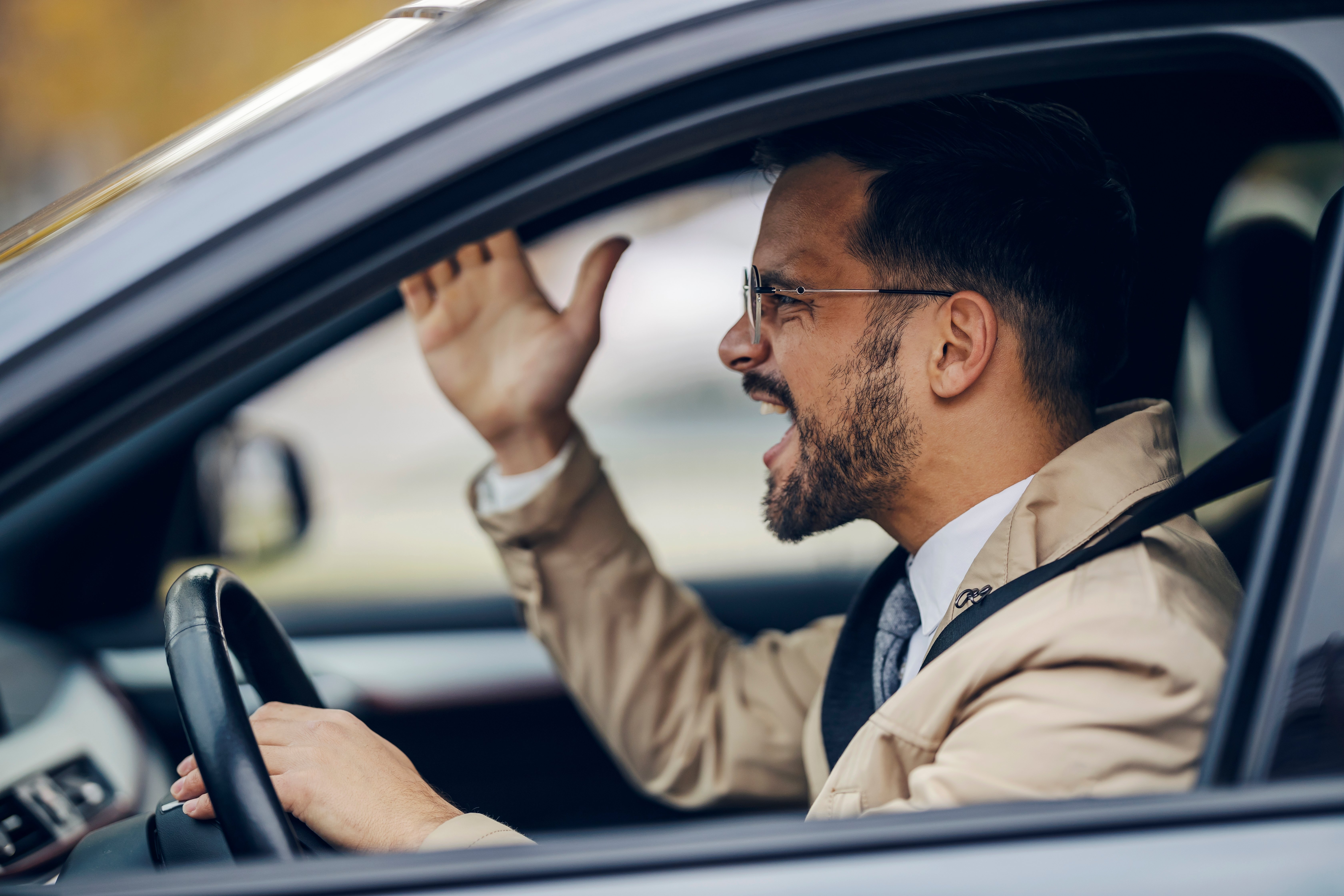
Simple steps to stay calm, stay safe, and avoid turning a bad moment into a big claim
Road rage is one of the fastest ways a normal drive turns into a story you never wanted to tell.
It can start with something tiny: a late merge, a slow left turn, a driver who will not let you in. Then the temperature rises. Someone tailgates. Someone honks. Someone gestures. Suddenly you are not just driving, you are managing a moving conflict at 60 miles per hour.
This article provides practical advice to help you stay safe.
You will learn:
- What road rage is, and why it escalates so quickly
- Six must-do actions to stay safe when you encounter an aggressive driver
- What not to do, even if you feel justified
- How to keep yourself from becoming the road rage driver on a stressful day
- A quick insurance checklist so you understand what coverage helps if road rage turns into damage
At Trailstone, we teach before we sell. We explain the “why” before the “what,” and we document what we recommend so there are fewer surprises later. We serve clients in Colorado, Arizona, Utah, Oregon, Washington, Idaho and Kansas, but this guidance works anywhere you drive.
Why road rage feels more common right now
If you feel like driving has gotten more aggressive over the last few years, you are not alone.
A Pew Research Center survey found that about 49% of Americans say people in their community are driving less safely compared with five years ago, and about a quarter report witnessing road rage often.
AAA’s most recent research is also eye-opening: 96% of drivers admit to engaging in aggressive driving behaviors within the past year, and AAA notes these behaviors can be contagious.
In other words, you are likely to run into aggressive driving, even if you are not looking for it.
The good news is that your response can prevent a bad encounter from becoming a dangerous one.
Road rage vs. aggressive driving: a quick definition that helps you act faster
People use “road rage” to describe everything from rudeness to violence. It helps to separate the two:
- Aggressive driving is a pattern of unsafe behavior that encroaches on others’ safe space, like speeding, following too closely, unsafe lane changes, and running red lights.
- Road rage is more serious. NHTSA describes road rage as an intentional assault by a driver or passenger using a motor vehicle or a weapon tied to something that happened on the roadway.
Why does this matter?
Because the safest way to handle road rage is to treat it like a potential safety threat, not like a disagreement to win.
The core mindset that keeps you safe
Before we get into the six must-do’s, here is the one mental shift that changes everything:
Your goal is to get home safely, not to teach someone a lesson.
AAA’s safety messaging is consistent on this point: calm, distance, and good road etiquette reduce escalation.
You can be right and still get hurt. Let “right” go. Choose safe.
6 Must-Do’s to Handle Road Rage Safely
1) Stay calm and do not engage
This is the hardest step, and it is the most important.
When someone is tailgating, honking, flashing lights, yelling, or gesturing, your brain wants to respond. That is normal.
But responding is how situations escalate.
AAA’s top guidance starts here: stay calm and do not engage, meaning no eye contact, no gestures, no response.
Colorado State Patrol says it plainly too: the worst choice is to respond aggressively, and training yourself to think safety over “equal aggressive response” is key.
Practical ways to stay calm in the moment:
- Breathe once, slow and deep
- Loosen your grip on the steering wheel
- Say a simple line to yourself: “I am not available for this.”
2) Give them space and let them go
Distance is one of the best de-escalation tools you have.
If someone is riding your bumper or weaving around you, your safest move is almost always to create space:
- Change lanes when safe
- Increase following distance
- Let them pass
Let the problem move away.
3) Avoid the standoff at lights, merges, and parking lots
A lot of road rage incidents get worse at choke points such as:
- Construction merges
- On-ramps
- Stop signs
- School pickup lines
- Parking lots
Your goal is to avoid getting boxed in next to an angry driver.
Simple habits help:
- Leave space in front of you at red lights
- Avoid pulling up door-to-door with aggressive drivers
- Allow merges even if someone is pushy
4) If you think you are being followed, never drive home
If you suspect a driver is following you, do not take them to your home or your child’s school.
A safe plan:
- Head toward a well-lit public place
- If possible, drive to a police station
- Stay in your locked vehicle and call for help
5) Document and report it safely
If it is safe, capture details such as:
- License plate number
- Vehicle description
- Location and direction of travel
- Observed behavior
Do not follow or pursue the vehicle and do not use your phone in a way that distracts from driving.
6) Call 911 when it crosses the line
Call 911 if:
- A driver tries to run you off the road
- A driver attempts to force you to stop
- You see a weapon or credible threat
- You are being followed and cannot safely get away
What not to do
- Do not make eye contact or gestures
- Do not brake-check
- Do not block them from passing
- Do not follow or pursue them
- Do not exit your vehicle to confront them
If you remember nothing else: do not take the bait.
If road rage turns into damage: how auto insurance usually responds
Auto insurance policies generally include liability coverage, property damage coverage, and uninsured or underinsured motorist coverage.
Here is what matters most in a road rage situation.
If someone hits your vehicle
- Their property damage liability may pay if they are at fault.
- Your collision coverage may pay for damage to your vehicle, subject to your deductible.
If someone vandalizes your vehicle
Comprehensive coverage often applies to damage caused by vandalism.
If it is a hit-and-run or uninsured driver
Uninsured motorist coverage may help if the other driver has no insurance.
Rental and towing
- Rental reimbursement coverage may provide a temporary vehicle.
- Towing or roadside assistance may cover towing after an incident.
Quick coverage check for real-life road rage risks
Look at your declarations page and confirm whether you have:
- Comprehensive coverage
- Collision coverage
- Uninsured/underinsured motorist coverage
- Rental reimbursement coverage
- Towing or roadside coverage
What to do next
Road rage is not something you can control on the road. But you can control your choices.
- Stay calm and do not engage
- Give space and let them go
- Never drive home if followed
- Report it when safe
On the insurance side, we can help make sure your policy fits real life.
- Send us your auto declarations page
- Tell us how you drive
- We will review key coverages and send a written summary of recommendations
Trailstone will provide a complimentary review of your insurance.
Reach out to Trailstone via our website www.trailstoneinsurance.com or give us a call.
Topics:
