

What Is Uninsured Motorist Property Damage (UMPD), and Do You Need It?
April 22nd, 2026
11 min. read
By Mark Rodgers
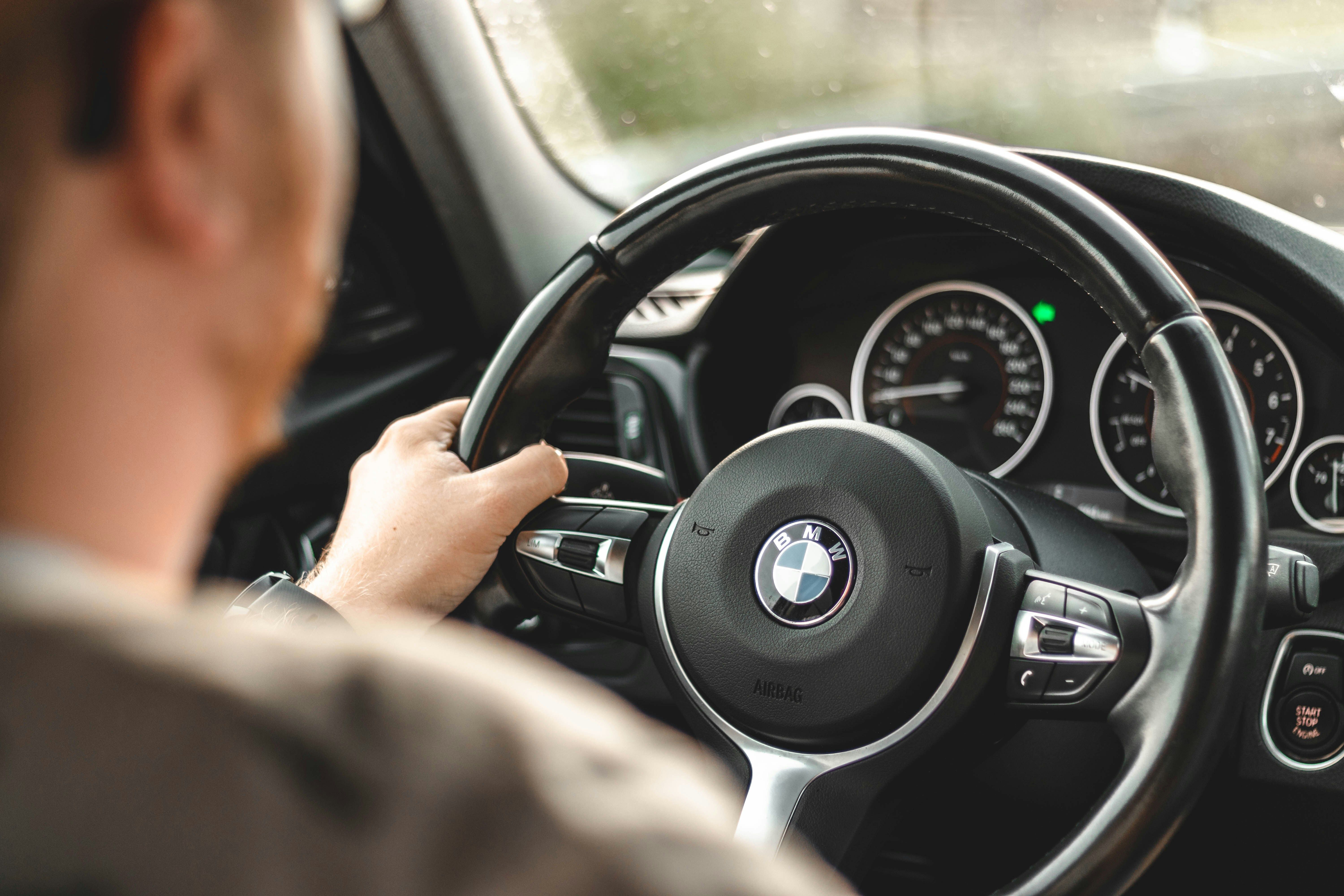
You are sitting at a red light on a Saturday morning, and a driver behind you plows into your bumper. The damage is clear: crumpled trunk, broken taillights, $6,500 in repairs. You exchange information, but when you call the other driver's insurance company, you find out they do not have a policy. No insurance at all. Now what? If you do not carry collision coverage on your vehicle, who pays for your repairs? This is exactly where uninsured motorist property damage coverage, commonly called UMPD, steps in.
Most people have heard of uninsured motorist coverage for bodily injury. That is the coverage that helps pay your medical bills if an uninsured driver hurts you. UMPD is different. It is specifically designed to cover damage to your vehicle and, in some states, other personal property like a fence or mailbox, when the at-fault driver has no insurance or not enough insurance to pay for the damage they caused. It is one of the most misunderstood and overlooked pieces of an auto insurance policy, and it deserves a closer look.
Why UMPD Matters More Than Most People Think
Here is the reality. According to the Insurance Research Council, approximately 14 percent of drivers in the United States were uninsured as of 2022. That is roughly one in every seven drivers on the road with no liability insurance at all. In some states, the numbers are even higher. Washington state, for example, has historically had one of the highest uninsured motorist rates in the country, with estimates around 21.7 percent. That means roughly one in five drivers on Washington roads may not carry any insurance.
In Colorado, approximately 16.3 percent of drivers were uninsured as of 2019. In Arizona, the estimated rate is around 12 percent. Even in states with lower rates, you only need one uninsured driver to cause a serious financial problem for you.
Now, if you carry full coverage on your vehicle, meaning you have both comprehensive and collision, you already have a safety net. Your collision coverage would step in and pay for the repairs, minus your deductible, regardless of whether the other driver was insured. But here is the key question: what if you do not carry collision coverage?
The Gap UMPD Fills
Many drivers, especially those with older or paid-off vehicles, choose to drop comprehensive and collision coverage to save money on premiums. That is a reasonable decision in many cases. If your car is worth $4,000, paying $800 a year for collision coverage with a $1,000 deductible may not make financial sense.
But dropping collision creates a gap. If an uninsured driver hits you, and you do not have collision coverage, you have two options: pay for the repairs yourself or try to sue the at-fault driver. The problem with the second option is straightforward. A driver who cannot afford insurance is unlikely to have the assets to pay for your vehicle damage, even if you win in court.
This is where UMPD becomes valuable. It fills that gap at a fraction of the cost of collision coverage. UMPD is specifically designed to cover damage to your vehicle when the at-fault driver does not have insurance, or does not have enough insurance, to cover the damage they caused. Think of it this way: if you are choosing not to carry collision, UMPD gives you at least some protection against the financial risk of sharing the road with uninsured drivers.
UMPD vs. Collision: Understanding the Differences
People often ask, "If UMPD and collision both cover damage to my car, why would I need both?" It is a fair question, and the answer comes down to scope, cost, and deductibles.
Collision coverage pays for damage to your vehicle after any collision with another vehicle or object, regardless of who is at fault. If you hit a tree, rear-end someone, or get rear-ended yourself, collision covers it. Collision deductibles typically range from $500 to $1,000, though some policies offer lower options.
UMPD coverage only pays for damage to your vehicle when the at-fault driver is uninsured or underinsured. It does not cover single-vehicle accidents, damage you cause, or situations where the other driver has adequate insurance. However, UMPD deductibles are often significantly lower than collision deductibles. In many states, the UMPD deductible can be as low as $100. In Washington state, for example, the mandatory UMPD deductible is $100 for identified drivers and $300 for hit-and-run situations. In Oregon, the deductible is $200, or $300 for hit-and-run or phantom vehicle incidents.
That deductible difference matters. If you carry a $1,000 collision deductible and get hit by an uninsured driver, you are out of pocket $1,000 before your insurance pays anything. With UMPD, that out-of-pocket amount could be $100 to $300 depending on your state and the circumstances.
Here is where it gets interesting. In some states, if you carry both UMPD and collision, UMPD can effectively act as a collision deductible waiver. Your insurance company processes the claim through collision coverage but uses UMPD to cover the difference between your collision deductible and your UMPD deductible. So if your collision deductible is $500 and your UMPD deductible is $100, you only pay $100 out of pocket. The UMPD coverage picks up the other $400. This is sometimes listed on your policy as a "collision deductible waiver" or CDW.
State Rules: Why Your Location Matters
UMPD is not available in every state, and the rules vary significantly depending on where you live. It is available in roughly 25 states plus Washington, D.C. Some states require it, some require insurers to offer it, and some leave it entirely up to the insurance company.
Here is how UMPD works in the states Trailstone Insurance Group serves:
Colorado
Colorado is a fault-based state, so the at-fault driver's insurance is supposed to pay for your damages. When that driver has no insurance, UMPD can step in to cover your vehicle damage. However, there is an important rule to know: in Colorado, UMPD and collision coverage are mutually exclusive. If you carry collision on your vehicle, you cannot also carry UMPD on that same vehicle. This makes UMPD especially relevant for Colorado drivers who have chosen not to carry collision, such as those with older or paid-off vehicles. If you do not have collision, UMPD is one of the only ways to protect your vehicle from damage caused by an uninsured driver. Separately, uninsured/underinsured motorist bodily injury coverage (UM/UIM) is a different coverage entirely. UM/UIM covers your medical bills, lost wages, and pain and suffering, and it can exist on your policy regardless of whether you carry collision or UMPD. Colorado law requires insurers to offer UM/UIM bodily injury coverage before any policy is issued or renewed. With approximately 16.3 percent of Colorado drivers uninsured, both coverages deserve serious consideration depending on your situation.
Washington
Insurers are required to offer UMPD, though you can decline it in writing. The UMPD deductible is $100 for accidents where the uninsured driver is identified, and $300 for hit-and-run situations. Washington also has one of the higher uninsured motorist rates in the country, making this coverage especially relevant. One important detail: in Washington, UMPD will only apply if the uninsured driver is identified. If the driver flees the scene and is never found, UMPD will not cover your vehicle damage. For that, you would need collision coverage.
Oregon
Insurers must offer UMPD, and the standard deductible is $200, or $300 if the accident involves a hit-and-run or phantom vehicle. Oregon law does not require physical contact for a UMPD claim, but the facts of the accident must be supported by evidence beyond just the testimony of anyone making a claim, and the accident must be reported to police within 72 hours.
Utah
UMPD is available, and in some cases, it may only be available to drivers who do not already carry collision coverage. This is an important distinction. If you already have collision on your policy, you may not be able to add UMPD separately in Utah. Your collision coverage would be your primary protection against damage from an uninsured driver.
Arizona
UMPD availability varies by carrier. Arizona does not mandate UMPD coverage, but some insurers offer it as an optional add-on. Given that Arizona's uninsured motorist rate is around 12 percent, it is worth asking about.
Idaho
UMPD is available from some carriers, and Idaho has one of the lowest uninsured motorist rates in the country at around 6.2 percent. While the risk is lower, it is not zero, and UMPD can still provide a cost-effective layer of protection.
Kansas
UMPD availability depends on the carrier. Kansas requires insurers to offer uninsured motorist bodily injury coverage, but the property damage component is handled differently depending on your insurer. Ask your agent what options are available.
When UMPD Is Most Valuable
UMPD is most valuable if you fit one or more of these descriptions:
You do not carry collision coverage. If you have dropped comprehensive and collision from your policy, UMPD is one of the few ways to protect your vehicle from damage caused by an uninsured driver without paying for full collision coverage. Since UMPD premiums are typically much lower than collision premiums, it is a cost-effective way to maintain some vehicle protection.
You have an older vehicle that does not justify full collision. If your car is worth $5,000 and your collision deductible is $1,000, you are only gaining $4,000 in potential coverage. UMPD, with its lower premiums and lower deductible, can be a better fit for this situation.
You live in a state with a high uninsured motorist rate. If you are in Washington, Colorado, or Arizona, the odds of encountering an uninsured driver are meaningful. UMPD provides a targeted layer of protection for that specific risk.
You want to reduce your out-of-pocket cost after an accident with an uninsured driver. Even if you carry collision, having UMPD can reduce or eliminate your collision deductible when the other driver is uninsured. That $100 deductible instead of a $500 or $1,000 deductible can make a real difference.
Common Misconceptions About UMPD
"I have uninsured motorist coverage, so I am already covered for property damage." Not necessarily. In many states, the standard uninsured motorist coverage on your policy is for bodily injury only (UMBI). It covers your medical bills, lost wages, and pain and suffering if an uninsured driver hurts you. It does not cover damage to your vehicle. UMPD is a separate coverage that must be added to your policy specifically for property damage.
"UMPD and collision are the same thing." They are not. Collision covers your vehicle in any collision, regardless of fault. UMPD only covers your vehicle when the at-fault driver is uninsured or underinsured. UMPD is narrower in scope but often cheaper and comes with a lower deductible.
"If I have collision, I do not need UMPD." This depends on your state and your deductible. If you carry a $1,000 collision deductible, UMPD can reduce your out-of-pocket cost to $100 or $200 when the at-fault driver is uninsured. That alone can justify the small additional premium.
"UMPD covers hit-and-run accidents." This varies by state. Some states allow UMPD to cover hit-and-run accidents. Others, like Washington, require the at-fault driver to be identified for UMPD to apply. If hit-and-run protection is important to you and you are in a state where UMPD does not cover it, you will need collision coverage for that scenario.
The Deductible Advantage
One of the most practical reasons to consider UMPD is the deductible. Here is a comparison to put it in perspective.
Imagine you are driving on I-25 in Colorado and an uninsured driver runs a stop sign and hits your passenger door. The damage totals $4,200. Here are two scenarios:
Scenario A: You carry collision coverage only, with a $1,000 deductible. Your insurance pays $3,200. You pay $1,000 out of pocket.
Scenario B: You carry both collision and UMPD, with a $100 UMPD deductible. Your insurance pays $4,100. You pay $100 out of pocket. The UMPD coverage effectively waives the difference between your collision deductible and the UMPD deductible.
That is a $900 difference in your pocket for a coverage that typically costs just a few dollars per month.
Now imagine a third scenario:
Scenario C: You have no collision and no UMPD. The damage is $4,200. You pay $4,200 out of pocket, or you try to sue an uninsured driver who likely does not have the money to pay.
How Much Does UMPD Cost?
UMPD is one of the most affordable coverages on an auto insurance policy. In most states, the annual cost of UMPD is roughly $30 to $80 per year, depending on your location, driving record, and the limits you select. Some surveys have found the median cost of UMPD to be around $38 per year. Compare that to collision coverage, which can easily run $300 to $800 or more per year depending on your vehicle and deductible.
For drivers who have decided that full collision coverage is not worth the cost, UMPD provides a targeted, low-cost alternative that specifically addresses one of the biggest risks on the road: uninsured drivers.
FAQ
Q: What does UMPD stand for? A: UMPD stands for uninsured motorist property damage. It is a coverage on your auto insurance policy that pays for damage to your vehicle caused by a driver who does not have insurance or does not have enough insurance to cover the damage.
Q: Is UMPD the same as uninsured motorist bodily injury (UMBI)? A: No. UMBI covers your medical bills, lost wages, and pain and suffering when an uninsured driver injures you. UMPD covers damage to your vehicle and, in some states, other property like a fence or mailbox. They are two separate coverages.
Q: Do I need UMPD if I already have collision coverage? A: You may not need it for basic vehicle protection, since collision covers damage to your car regardless of fault. However, UMPD can reduce your out-of-pocket deductible when the at-fault driver is uninsured. In many states, UMPD deductibles are as low as $100 compared to $500 or $1,000 for collision.
Q: Is UMPD required in Colorado? A: Colorado does not mandate UMPD, but it is available from many carriers. The important detail to know is that UMPD and collision coverage are mutually exclusive in Colorado. If you already carry collision, you cannot add UMPD to the same vehicle. If you do not carry collision, UMPD can be a cost-effective way to protect your vehicle from uninsured driver damage. Separately, UM/UIM bodily injury coverage is always available and can be carried regardless of whether you have collision or UMPD.
Q: Is UMPD required in Washington state? A: Washington requires insurers to offer UMPD, but you can decline it in writing. The deductible in Washington is $100 for identified uninsured drivers and $300 for hit-and-run situations.
Q: Does UMPD cover a hit-and-run accident? A: It depends on your state. Some states allow UMPD to cover hit-and-run accidents, while others require the at-fault driver to be identified. In Washington, for example, UMPD only applies if the uninsured driver is identified. Check your state's rules and your specific policy.
Q: Can I have both UMPD and collision on my policy? A: In many states, yes. Having both gives you broader coverage: collision for any accident regardless of fault, and UMPD for the deductible advantage when the other driver is uninsured. However, in some states this is not allowed. In Colorado, UMPD and collision are mutually exclusive, so you cannot carry both on the same vehicle. In Utah, you may only be able to purchase UMPD if you do not already have collision coverage. Check with your agent to understand how your state handles this.
Q: How much does UMPD cost? A: UMPD is typically one of the least expensive coverages on an auto policy. Many drivers pay between $30 and $80 per year for UMPD coverage, though costs vary by state, carrier, and driving history.
Q: What is a collision deductible waiver (CDW)? A: A collision deductible waiver is a feature that waives your collision deductible when your vehicle is damaged by an uninsured motorist. In some states, UMPD acts as this waiver. If you have both UMPD and collision, your insurer may use UMPD to cover the gap between your collision deductible and your lower UMPD deductible.
Q: Who should seriously consider adding UMPD to their policy? A: Drivers who do not carry collision coverage, drivers with older vehicles, drivers in states with high uninsured motorist rates, and anyone who wants to reduce their out-of-pocket cost after an accident with an uninsured driver.
What to Do Next: Trailstone's Recommendations
Pull out your auto insurance declarations page and look for UMPD. If it is not listed, it may not be on your policy. If it is listed, check the deductible amount.
Compare your UMPD deductible to your collision deductible. If you carry both, make sure the UMPD deductible is lower than your collision deductible so you benefit from the deductible waiver effect.
If you do not carry collision coverage, ask about adding UMPD. It may be one of the most cost-effective ways to protect your vehicle from damage caused by uninsured drivers.
Check whether your state allows UMPD to cover hit-and-run accidents. If it does not, and hit-and-run protection is important to you, collision may be worth reconsidering.
Ask your agent how UMPD interacts with your other coverages. Every state and every carrier handles this differently, and your agent can walk you through the specifics of your policy.
Next Steps
If you are not sure whether UMPD is on your policy, or if you want to know how it applies in your state, reach out to Trailstone via our website at www.trailstoneinsurance.com or give us a call. We will walk through your current coverages, explain what UMPD can and cannot do for your specific situation, and make sure you are not carrying a gap you do not know about.
Trailstone will provide a complimentary review of your insurance and a written summary for your records. Whether you need to add UMPD, adjust your deductibles, or just want a second set of eyes on your policy, we are here to help you make an informed decision.
Written by Mark Rodgers, President and Founder, Trailstone Insurance Group
