



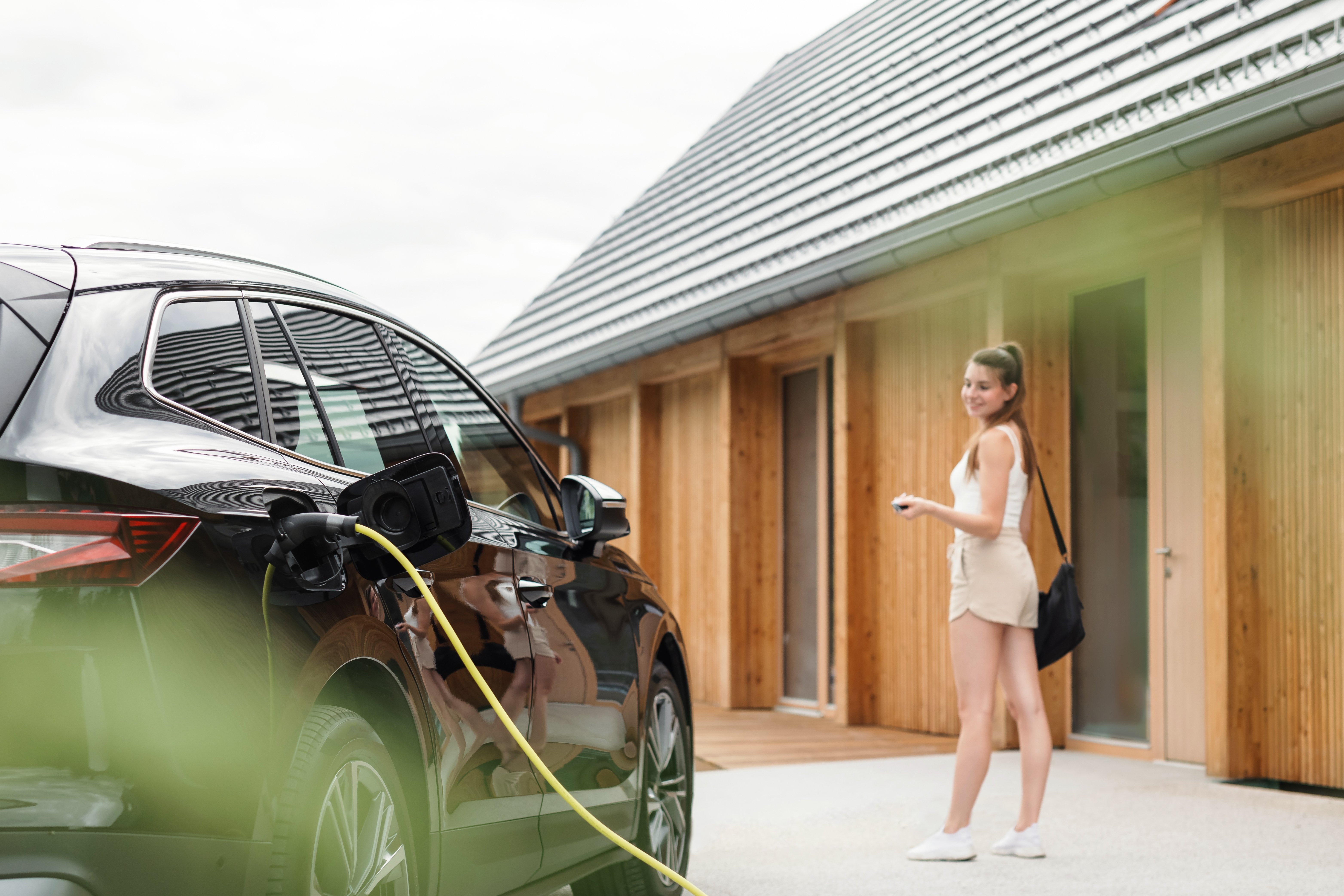
Thinking about going electric? You are not alone. Electric vehicles are showing up in more driveways every year, and one of the biggest questions we hear from clients is whether EVs are actually as safe as their gas-powered counterparts. The short answer: yes. In many cases, they are safer.
We pulled together safety data from three independent sources to build this list. The Insurance Institute for Highway Safety (IIHS), the National Highway Traffic Safety Administration (NHTSA), and Euro NCAP all conduct rigorous, independent crash testing, and the EVs on this list performed at or near the top across those evaluations. We also cross-referenced editorial rankings from U.S. News, Kelley Blue Book, Consumer Reports, Edmunds, and Autoblog to make sure we were not relying on any single opinion.
Every vehicle on this list is a true, fully battery-electric vehicle. No hybrids. No plug-in hybrids. All 10 are 100% electric.
And here is the insurance angle. The same principle from our Top 10 Safest SUVs list applies: safer vehicles tend to qualify for better rates on medical coverages like personal injury protection and med pay. A vehicle that helps prevent accidents or reduces injury severity is a vehicle that costs less to insure over time. That is true whether it runs on gas or electricity.
A quick note on why EVs tend to perform well in crash testing. The battery pack sits low in the floor of the vehicle, which creates a lower center of gravity and significantly reduces rollover risk. The absence of a large engine block up front also means there is more crumple zone available to absorb energy in a frontal collision. These are structural advantages baked into the design of every EV, and they show up clearly in the crash test results.
The IIHS tightened its testing criteria again for 2025, including a rear-seat crash test dummy in the moderate overlap front test to evaluate how well vehicles protect back seat passengers. Despite these tougher standards, nine electric vehicles earned the IIHS's highest Top Safety Pick+ award. Our top 10 includes all of those plus one additional EV with strong safety credentials.
We are counting down from number 10 to number 1.
10. 2025 Toyota bZ4X
The bZ4X is Toyota's entry into the electric SUV market, and it earned an IIHS Top Safety Pick+ for 2025 models built after December 2024. It shares its platform with the Subaru Solterra (also on this list), but Toyota's version brings its own calibration of safety systems. It is one of the most affordable EVs on this list, making top-tier safety accessible at a lower price point.
How it rated across our sources:
- IIHS: Top Safety Pick+ (for models built after December 2024)
- NHTSA: Five star overall safety rating
- Consumer Reports and IIHS both include it on their 2025 safest EV lists
Safety features worth knowing about:
- Toyota Safety Sense 3.0 (Standard): Includes pre-collision system with pedestrian and cyclist detection, full-speed dynamic radar cruise control, lane departure alert with steering assist, and lane tracing assist.
- Blind Spot Monitor with Rear Cross Traffic Alert: Standard equipment that provides awareness of vehicles in your blind spots and approaching from the side when reversing.
- Proactive Driving Assist: Uses radar and cameras to detect potential hazards and subtly adjusts vehicle speed and steering to help the driver maintain a safe distance and lane position. This operates in the background without requiring driver input.
- Bird's Eye View Camera: Provides an overhead view of the vehicle and its surroundings, making parking and low-speed maneuvering safer and easier.
9. 2025 Subaru Solterra
The Solterra is Subaru's first fully electric vehicle, and it earned an IIHS Top Safety Pick+ for the third consecutive year in 2025. Every Solterra comes standard with all-wheel drive, which is uncommon in this price range for an EV. Subaru also lowered the starting price for 2025 to under $40,000, making it one of the best values on this list.
How it rated across our sources:
- IIHS: Top Safety Pick+ for three consecutive years
- NHTSA: Five star overall safety rating
- Kelley Blue Book, Consumer Reports, and U.S. News all recognize it as one of the safest affordable EVs
Safety features worth knowing about:
- EyeSight Driver Assist Technology (Standard): Subaru's proven system includes adaptive cruise control, pre-collision braking with pedestrian and cyclist detection, lane departure and sway warning, and lane keep assist.
- Standard All-Wheel Drive: Every Solterra comes with AWD, providing better traction in rain, snow, and loose gravel. For drivers in Colorado, Utah, Idaho, or the Pacific Northwest, this is a significant safety advantage year round.
- Blind Spot Detection with Lane Change Assist and Rear Cross Traffic Alert: Monitors your blind spots and warns of approaching vehicles when you are reversing.
- Safe Exit Assist: Warns passengers of approaching vehicles or cyclists before they open their doors. This feature is especially useful in urban areas or busy parking lots.
- Surround View Camera (Available): Provides a 360 degree overhead view of the vehicle on higher trims for safer parking and maneuvering.
8. 2025 Genesis GV60
The GV60 is Genesis's compact electric SUV, built on the same 800-volt platform as the Hyundai Ioniq 5 and Kia EV6 but with a more premium interior and additional standard features. It earned an IIHS Top Safety Pick+ for 2025. Genesis earned more IIHS safety awards than any other luxury brand in recent years, and the GV60 is a big part of that reputation.
How it rated across our sources:
- IIHS: Top Safety Pick+ with "Good" ratings across all crash tests
- NHTSA: Not yet fully rated for the 2025 GV60, but the gas-powered GV70 platform earned five stars
- Euro NCAP: Five star rating (tested in 2022)
- Kelley Blue Book and Consumer Reports list the GV60 among the safest electric SUVs
Safety features worth knowing about:
- Forward Collision Avoidance Assist with Pedestrian Detection (Standard): Detects vehicles and pedestrians and applies the brakes if a collision is imminent.
- Lane Following Assist (Standard): Keeps the vehicle centered in its lane using camera and radar data, even on curved roads.
- Blind Spot Collision Avoidance Assist (Standard): If you begin to change lanes while a vehicle is in your blind spot, the system applies corrective braking. This goes beyond a simple warning light.
- Rear Cross Traffic Alert with Autobrake (Standard): Detects vehicles approaching from the side when reversing and applies the brakes automatically.
- Remote Smart Parking Assist: Allows the vehicle to park or exit a space autonomously while you stand outside with the key fob.
7. 2025 Audi Q6 e-tron
The Q6 e-tron is Audi's newest electric SUV, and it earned an IIHS Top Safety Pick+ in its first year on the market. It offers up to 321 miles of range, which is competitive with anything in its class. Audi loaded it with standard safety features that other manufacturers charge extra for, and the result is a vehicle that performed at the top of the IIHS's toughest-ever testing criteria right out of the gate.
How it rated across our sources:
- IIHS: Top Safety Pick+ with "Good" ratings across all crash tests
- NHTSA: Not yet fully rated for 2025
- Autoblog and Kelley Blue Book both include the Q6 e-tron on their safest EV lists
Safety features worth knowing about:
- Front Emergency Brake Assist with Pedestrian Detection (Standard): Detects vehicles and pedestrians and applies the brakes automatically to help avoid or reduce the severity of a collision.
- Adaptive Cruise Control with Lane Guidance (Standard): Maintains your set speed and following distance while helping keep the vehicle centered in its lane.
- Swerve Assist (Standard): If the system detects an unavoidable collision ahead, it provides steering support to help you steer around the obstacle. This is a less common feature that can make a meaningful difference in emergency situations.
- Front Turn Assist and Front Cross Traffic Assist (Standard): Monitors oncoming and cross traffic at intersections and applies the brakes if a collision is detected while turning.
- Secondary Collision Brake Assist: After an initial collision, the system automatically applies the brakes to help prevent secondary impacts. When airbags have already deployed, preventing a secondary collision becomes critical.
6. 2025 Genesis Electrified GV70
The Electrified GV70 is the electric version of one of the most awarded luxury SUVs on the market. It earned an IIHS Top Safety Pick+ and shares the same comprehensive safety suite as its gas-powered sibling, with the added structural benefits of an EV platform. The entire Genesis lineup earned a five star overall NHTSA rating for 2025, which is an achievement no other luxury brand can currently match.
How it rated across our sources:
- IIHS: Top Safety Pick+ with "Good" ratings across all crash tests
- NHTSA: Five star overall safety rating (for the GV70 platform)
- Kelley Blue Book, U.S. News, and Consumer Reports all highlight the Electrified GV70 as one of the safest luxury EVs
Safety features worth knowing about:
- Forward Collision Avoidance Assist with Pedestrian and Cyclist Detection (Standard): Detects vehicles, pedestrians, and cyclists and applies the brakes if needed.
- Blind Spot Collision Avoidance Assist with Steering Assist (Standard): Not only warns you of vehicles in your blind spot but provides active steering input if you begin a dangerous lane change.
- Lane Following Assist with Highway Driving Assist (Standard): Combines lane centering, adaptive cruise control, and speed adjustment based on road conditions and navigation data.
- Blind Spot View Monitor (Standard): Displays a live camera view of your blind spot directly on the instrument cluster when you activate your turn signal. You see exactly what is next to you.
- Rear Cross Traffic Collision Avoidance Assist with Autobrake (Standard): Detects approaching vehicles when reversing and brakes automatically if a collision is imminent.
5. 2025 Ford Mustang Mach-E
The Mustang Mach-E earned an IIHS Top Safety Pick+ and a five star overall safety rating from the NHTSA. It is one of the most fun to drive EVs on the market, and it backs up the performance with serious safety credentials. Every trim comes loaded with Ford's full safety suite, so you are not paying extra for the features that matter most.
How it rated across our sources:
- IIHS: Top Safety Pick+ with "Good" ratings across all crash tests
- NHTSA: Five star overall safety rating, with five stars in both frontal and side crash evaluations
- U.S. News, Kelley Blue Book, and Consumer Reports all include the Mach-E on their safest EV lists for 2025
Safety features worth knowing about:
- Ford Co-Pilot360 Active 2.0 (Standard): Includes automatic emergency braking, adaptive cruise control, blind spot monitoring with cross traffic alert, evasive steering assist, lane keeping, reverse brake assist, and a 360 degree camera. All of this comes standard on every trim.
- Intersection Assist: Detects oncoming traffic when you are turning left at an intersection and applies the brakes if a collision is imminent. Intersection accidents are among the most common, and this feature directly addresses that risk.
- Post-Collision Braking: After an initial impact, the system automatically applies the brakes to reduce the severity of a secondary collision.
- BlueCruise Hands-Free Highway Driving: Allows hands-free driving on over 130,000 miles of pre-qualified highways while monitoring driver attention through an interior camera.
4. 2025 Kia EV9
The EV9 is the largest electric SUV on our list, with three rows of seating and enough room for the whole family. It earned an IIHS Top Safety Pick+ with an upgraded rating compared to last year, proving that a spacious family hauler can also be one of the safest vehicles on the road.
How it rated across our sources:
- IIHS: Top Safety Pick+ with "Good" ratings across all crashworthiness categories
- NHTSA: Not yet fully tested for 2025, but the structurally identical 2024 model earned a five star overall rating
- Kelley Blue Book, U.S. News, and Autoblog all highlight the EV9 as one of the safest EVs available
Safety features worth knowing about:
- Forward Collision Avoidance Assist 2 with Junction Crossing: Detects vehicles, pedestrians, and cyclists in multiple scenarios, including when you are crossing through an intersection.
- Highway Driving Assist 2: Combines adaptive cruise control, lane centering, and semi-automated lane change assistance into one system.
- Remote Smart Parking Assist 2: The vehicle can park itself or pull out of a parking space while you stand outside with the key fob.
- Blind Spot Collision Avoidance Assist: If you start to change lanes while a vehicle is in your blind spot, the system applies corrective braking to help avoid a collision.
3. 2025 Hyundai Ioniq 5
The Ioniq 5 has been one of the top-rated EVs for safety since it launched, and that continues into 2025. It earned an IIHS Top Safety Pick+ and a five star overall NHTSA rating. For 2025, Hyundai added structural reinforcements, more airbags, and expanded the standard safety feature list. If you want a compact electric SUV that checks every safety box without breaking the bank, this is the one.
How it rated across our sources:
- IIHS: Top Safety Pick+ for 2024 and 2025 (consecutive years)
- NHTSA: Five star overall safety rating
- Consumer Reports, Kelley Blue Book, Edmunds, and U.S. News all rank the Ioniq 5 among the safest EVs for 2025
Safety features worth knowing about:
- Forward Collision Avoidance Assist with Junction Turning: Detects vehicles, pedestrians, and cyclists, and automatically brakes if it senses a collision risk when you are turning left at an intersection.
- Highway Driving Assist 2 with Lane Change Assist: Standard on upper trims, combining adaptive cruise, lane centering, and automated lane change assistance.
- Blind Spot View Monitor: When you activate your turn signal, a live camera view of your blind spot appears on the digital instrument cluster.
- Rear Cross Traffic Collision Avoidance Assist: Detects vehicles approaching from the side when you are backing out of a space and automatically applies the brakes.
- Remote Smart Parking Assist: Allows the vehicle to park or exit a space autonomously while you stand nearby with the key fob.
2. 2025 Rivian R1S
The Rivian R1S earned an IIHS Top Safety Pick+ for 2025 models built after August 2024, making it the only large SUV of any powertrain type to earn the IIHS's highest safety designation. This is a significant improvement from the previous generation, which earned the lower Top Safety Pick. Rivian made structural modifications to the front body and rear seats specifically to improve crash protection, and those changes paid off.
How it rated across our sources:
- IIHS: Top Safety Pick+ with "Good" ratings across all crash tests (for models built after August 2024)
- NHTSA: Not yet fully rated for the 2025 model at the time of writing
- Edmunds, U.S. News, and Consumer Reports all recognize the R1S as one of the safest large electric SUVs available
Safety features worth knowing about:
- Adaptive Cruise Control with Highway Assist: Provides semi-automated highway driving with lane centering, adaptive speed control, and automatic lane changes under driver supervision.
- Automatic Emergency Braking with Pedestrian and Cyclist Detection: Standard across all trims, detecting people and cyclists in the vehicle's path and applying the brakes automatically.
- Post-Impact Automatic Braking: After an initial collision is detected and forward momentum stops, the brakes are automatically applied to prevent secondary movement. This is a rare and valuable feature.
- Automatic Adaptive Headlights: New for 2025, these headlights adjust beam patterns based on driving conditions, improving nighttime visibility.
- 11 Standard Airbags: Front, side, curtain, and knee airbags provide comprehensive coverage in multiple impact scenarios.
1. 2025 Volvo EX90
Volvo has built its entire brand around safety, and the EX90 is the most advanced safety vehicle Volvo has ever produced. It earned an IIHS Top Safety Pick+ for models built after July 2024, with "Good" ratings across all crashworthiness and crash prevention categories. In Euro NCAP testing, the EX90 earned a full five star rating with standout scores for both adult and child occupant protection. This is Volvo's flagship electric SUV, a three row family vehicle with up to 300 miles of range, and it sits at the top of our list because no other EV packs this much safety technology into a single vehicle.
How it rated across our sources:
- IIHS: Top Safety Pick+ with "Good" ratings across all crash and crash prevention tests (for models built after July 2024)
- Euro NCAP: Five star overall rating with excellent scores for adult occupant, child occupant, and safety assist categories
- NHTSA: Not yet fully rated for the 2025 EX90 at the time of writing
- Kelley Blue Book, U.S. News, Edmunds, and Consumer Reports all highlight the EX90 as one of the safest vehicles of any type for 2025
Safety features worth knowing about:
- Pilot Assist with Automatic Lane Changing: A semi-autonomous driving system that handles acceleration, braking, and steering at highway speeds. When you signal a lane change, the system evaluates surrounding traffic and assists in executing it safely. This is standard, not an add-on.
- City Safety with Autobrake: Detects vehicles, pedestrians, cyclists, and large animals and automatically applies the brakes. For anyone driving in rural areas of Colorado, Utah, or Idaho where wildlife crossings are a real concern, this feature is invaluable.
- 360 Degree Camera with Cross Traffic Alert and Autobrake: Provides a complete view around the vehicle and automatically brakes when it detects cross traffic while reversing.
- Driver Monitoring System: Two interior infrared cameras track the driver's eye movement and head position. If the system detects drowsiness, distraction, or that the driver is not looking at the road, it issues warnings and can take progressive action, including slowing the vehicle.
- Five Radar Units, Multiple Cameras, and Ultrasonic Sensors: The EX90 uses a comprehensive sensor array to build a detailed picture of the environment around the vehicle.
- Occupant Sensing: Detects even small movements inside the vehicle after it is parked and locked, alerting you if a child, pet, or passenger has been left behind. In a state like Arizona or Colorado in summer, this feature could genuinely save a life.
The Full Ranking at a Glance
- Volvo EX90 — IIHS TSP+, Euro NCAP 5 Stars
- Rivian R1S — IIHS TSP+ (only large SUV with top designation)
- Hyundai Ioniq 5 — IIHS TSP+, NHTSA 5 Stars
- Kia EV9 — IIHS TSP+ (only three-row electric SUV with top designation)
- Ford Mustang Mach-E — IIHS TSP+, NHTSA 5 Stars
- Genesis Electrified GV70 — IIHS TSP+, NHTSA 5 Stars (platform)
- Audi Q6 e-tron — IIHS TSP+
- Genesis GV60 — IIHS TSP+, Euro NCAP 5 Stars
- Subaru Solterra — IIHS TSP+ (three consecutive years), NHTSA 5 Stars
- Toyota bZ4X — IIHS TSP+, NHTSA 5 Stars
Frequently Asked Questions
Q: Are electric vehicles actually safer than gas-powered vehicles? A: Based on current crash test data, EVs perform at least as well as gas-powered vehicles and often better. The battery pack placement creates a lower center of gravity, which reduces rollover risk, and the absence of a large engine up front provides more space for energy absorption in frontal crashes. Nine EVs earned the highest IIHS Top Safety Pick+ designation for 2025, which is a strong showing relative to the overall market.
Q: Does driving an EV affect my insurance rates? A: It can. The safety ratings work in your favor, but there are other factors at play. EV repair costs tend to be higher because of specialized parts and battery technology, which can push comprehensive and collision premiums up. However, the strong safety ratings and advanced driver assist features often help offset that on the medical coverage side. An independent insurance agent can run the numbers for your specific situation and help you find the best balance of coverage and price.
Q: What about battery fires? Should I be concerned? A: Modern EVs are engineered with extensive battery protection systems, including impact shields, cooling systems, and automatic disconnects. While battery fires have made headlines, they are statistically rare compared to fires in gas-powered vehicles. The structural design of the battery enclosure is a major part of why EVs perform so well in crash tests, since it adds rigidity to the floor of the vehicle.
Q: Why are some vehicles on this list only rated for specific build dates? A: Manufacturers sometimes make mid-year safety improvements, such as reinforcing body structures or upgrading seatbelt systems. When they do, the IIHS may test the updated version and apply the rating only to vehicles built after the change was implemented. This is why we recommend checking the specific build date of any vehicle you are considering. The build date is typically listed on the certification label on the driver's door or adjacent B-pillar.
Q: I want an EV but I live in a rural area. Is that practical? A: Range and charging infrastructure have improved significantly. Several vehicles on this list offer 300 or more miles of range, and fast-charging networks continue to expand. For rural drivers in states like Colorado, Idaho, Utah, or Oregon, features like Volvo's large animal detection and standard all-wheel drive on the Subaru Solterra and Rivian R1S are especially relevant. An independent insurance agent who knows your area can also help you think through coverage considerations specific to rural driving, such as comprehensive coverage for animal strikes.
Q: What if I am not ready for a fully electric vehicle? A: Check out our Top 10 Safest SUVs for 2025 list, which includes both gas-powered and hybrid options. Several of those vehicles, including the Volvo XC90, are available as plug-in hybrids, giving you the safety benefits of an electrified platform without full commitment to electric-only driving.
Q: Why is the Tesla Model Y not on this list? A: The Tesla Model Y earned an IIHS Top Safety Pick+ for the fifth consecutive year and has strong crash test results. It was a strong contender and could easily be on this list. We gave the edge to other vehicles based on the depth of their standard driver-assist feature suites and how they performed across all three of our rating sources. The Model Y is an excellent choice for safety and deserves recognition. If it is on your shortlist, the safety data supports that decision.
What to Do Next
- Check the IIHS and NHTSA ratings for any EV you are considering before you buy. Verify the specific model year and build date to make sure the safety ratings apply to your vehicle.
- Ask your insurance agent how an EV purchase would affect your full coverage profile, not just the premium for one line. A safer vehicle can lower medical coverage costs even if repair costs push collision premiums slightly higher.
- Review your current coverage to make sure it accounts for the replacement cost of modern safety technology. If your current vehicle does not have advanced driver assist features and your next one will, that is a conversation worth having with your agent.
- Schedule a complimentary insurance review with Trailstone to see how your vehicle choice, location, and driving patterns all factor into your coverage and rates.
Your Next Step
Whether you are shopping for an electric vehicle or simply want to make sure your current coverage keeps up with your life, reach out to Trailstone via our website at www.trailstoneinsurance.com or give us a call. We will do the shopping for you. We work with more than 40 top tier insurance companies and make it easy to find the best price and coverage available.
Trailstone will provide a complimentary review of your insurance.
Written by Mark Rodgers, President and Founder, Trailstone Insurance Group
Topics:
