



Should You Buy GAP Insurance at the Dealership or Through Your Auto Policy?
August 17th, 2026
9 min. read
By Mark Rodgers
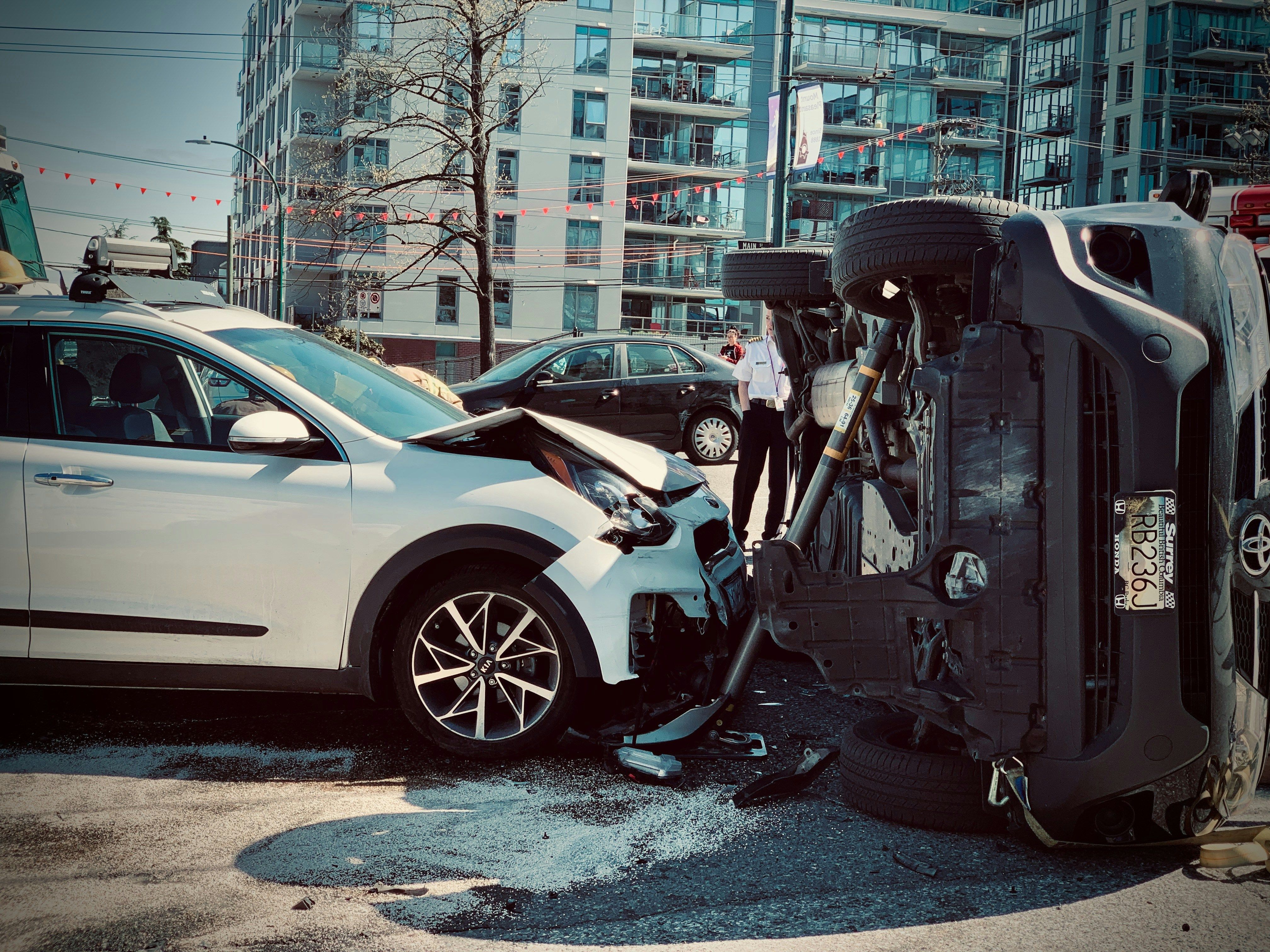
You are at the finance desk after picking out the car. The paperwork is in front of you, the kids are getting restless in the showroom, and the finance manager slides over a one-page summary that includes something called GAP coverage for around $895. You can take it now, or you can keep moving. Most people sign because they do not know there is another option, and they do not know that other option costs a fraction of what the dealer is charging.
Buying or leasing a vehicle soon?
Before you sign for dealership GAP, let Trailstone check whether your auto carrier offers the same protection for less.
Here's the Short Answer
For most buyers, adding GAP through your auto insurance carrier is the smarter move. It is dramatically cheaper, often costing $20 to $60 per year compared to $500 to $1,000 at the dealership. But there is a catch you need to know about: most carriers require you to add GAP within a short window after you buy or lease the vehicle, and many will only add it to vehicles that are brand new or close to it. If you miss the window, the dealer policy may be your only option. The right move is to know the rules before you walk into the dealership, not after.
What GAP Insurance Actually Does
GAP stands for Guaranteed Asset Protection. It pays the difference between what you owe on a car loan or lease and what your insurance company says the vehicle is worth at the moment it is totaled or stolen.
Here is the problem GAP solves. New vehicles depreciate fast. A car that costs $42,000 the day you drive it off the lot might be worth $34,000 six months later. If you put little or nothing down, financed taxes and fees, or rolled negative equity from a trade-in into the new loan, you could easily owe more than the car is worth for the first two or three years of ownership.
If that car is totaled while you are upside down, your auto insurance only pays the actual cash value, which is the market value at the moment of loss, minus your deductible. The bank still wants to be paid in full. The difference between those two numbers becomes your problem.
GAP coverage steps in and pays that difference, so you walk away clean instead of making payments on a car that no longer exists.
Not sure whether you actually need GAP?
Trailstone can review your vehicle, loan, down payment, and current auto policy to help determine whether GAP makes sense for you.
The Real Cost Comparison
This is where the conversation usually ends for people who do their homework. The price difference between dealer GAP and carrier GAP is not small. It is enormous.
| Where You Buy It | Typical Cost | How You Pay | What Else to Know |
|---|---|---|---|
| Auto dealership | $500 to $1,000 one-time | Rolled into the loan, so you pay interest on it for the life of the loan | Often refundable on a prorated basis if you cancel early or pay off the loan |
| Auto insurance carrier | $20 to $60 per year, depending on carrier and vehicle | Added to your existing auto premium | Can usually be removed any time once you have positive equity |
| Lender or credit union | $200 to $700 one-time | Often financed or paid up front at closing | Coverage terms vary widely by lender |
Look at the dealer number again. A $700 GAP policy financed into a 72-month loan at 7.5 percent interest does not actually cost $700. By the time you finish paying, you have paid roughly $870 for it. Now compare that to roughly $40 a year through your carrier for as long as you actually need the coverage, which is usually two to three years.
If you carry carrier GAP for three years at $40 a year, you spend $120. The dealer route on the same loan costs you about $870. That is a difference of $750 for the exact same protection.
Before you pay hundreds for dealership GAP, compare it.
A quick comparison can show whether your current auto carrier offers GAP for significantly less and whether your vehicle qualifies.
The Catch Most People Miss: Carrier Rules and Time Limits
Now the part Mark wants you to actually understand, because this is where families get tripped up.
Insurance carriers do not let you add GAP whenever you want. Each company has its own rules, and those rules typically cover three areas: how new the vehicle has to be, how soon after you buy it you have to add coverage, and what other coverages must already be on the car.
The rules vary by carrier and can change, so we always confirm specifics at the time of quote. Here is the general landscape so you know what to look for:
| Common Carrier Rule | What It Usually Means |
|---|---|
| Vehicle age limit | Many carriers will only add GAP to vehicles that are brand new or within the current and prior model year. Some allow up to two or three model years old. Used vehicles are often not eligible at all. |
| Time window after purchase | Many carriers require GAP to be added when the vehicle is first added to your policy or within 30 days of purchase. Miss the window and you may be locked out for the life of that loan. |
| Comprehensive and collision required | You cannot add GAP to a vehicle that does not already carry both comprehensive and collision coverage. GAP is built on top of those coverages, not in place of them. |
| Owner versus leaseholder | Some carriers cover both financed and leased vehicles. Others only cover one. Lease-specific GAP is sometimes called "lease/loan payoff coverage" or "loan/lease coverage." |
| Payout cap | Carrier GAP often caps the payout at a percentage above your vehicle's actual cash value, commonly around 25 percent. Most loans fall safely inside that cap, but if you financed heavy negative equity into the new loan, ask your agent to run the numbers. |
The single biggest reason families end up paying for dealer GAP is not because the dealer policy was better. It is because they did not know the carrier rules and tried to add coverage two months later, only to find out they had missed the window.
Already bought the vehicle?
GAP eligibility windows can be short. Trailstone can check whether your vehicle still qualifies before the opportunity to add coverage closes.
Imagine Two Families on the Same Street
Two families in the same Denver neighborhood buy the same vehicle on the same weekend, a $44,000 SUV with $2,000 down and the rest financed for 72 months.
The first family signs the dealer's GAP at the finance desk. They pay $895 rolled into the loan. After interest, they will end up paying close to $1,100 for it over the life of the loan. They never check whether their insurance carrier offered the same protection.
The second family says they want to think about it overnight. They call Trailstone the next morning. We confirm their carrier offers GAP, that the vehicle qualifies, and that we are well inside the window to add it. Their cost is $44 per year. They keep it for three years until they are no longer upside down on the loan, then drop it. Total cost: $132.
Same vehicle. Same protection. About $1,000 different.
The only difference between those two families is that the second family asked one question before signing.
When the Dealer GAP Might Actually Be the Right Answer
To be fair, the dealer policy is not always wrong. There are real situations where it is the better fit:
- You bought a used vehicle that does not qualify for carrier GAP under your insurance company's rules.
- You missed the time window with your carrier and now they will not add it.
- You financed substantial negative equity into the new loan and need a higher payout cap than a carrier policy would offer.
- Your specific carrier does not offer GAP at all, which does happen with some companies.
- You bought through a credit union or lender that offers GAP at a competitive price as part of the loan package.
If any of those apply, the dealer or lender option may be your only path, and it is still better than no GAP at all when you are upside down on a loan. The point is not to never buy from the dealer. It is to make the choice with eyes open.
How to Handle This Before You Sign Anything
Here is the practical playbook we walk our clients through before they head to the dealership.
Step 1. Before you go car shopping, call your independent agent. Ask whether your current carrier offers GAP, what their eligibility rules are, and what the time window is to add it after purchase. If you do not have an independent agent, this is one of many reasons to consider getting one.
Step 2. When you are at the dealer and they offer GAP, politely decline or ask to revisit it later. Tell them you want to compare options. Good finance managers will respect that. Pushy ones tell you the offer "expires today," which is rarely true.
Step 3. Within a day or two of bringing the car home, call your agent and add the vehicle to your policy with comprehensive, collision, and GAP. This is also the right moment to review your liability limits, because a new and more valuable vehicle can change your overall risk picture.
Step 4. Watch your loan balance over time. Once the vehicle is worth more than you owe, you can drop GAP and lower your premium. There is no reason to keep paying for it after you have positive equity.
Heading to the dealership?
Talk to Trailstone before you sign. We can check your carrier's GAP rules and help you know your options before you reach the finance desk.
Where Trailstone Fits
Trailstone Insurance Group works with more than 40 carriers across Colorado, Arizona, Utah, Oregon, Washington, Idaho, and Kansas. That matters here because GAP rules vary so much between companies. One carrier may not offer GAP at all. Another may offer it with a tight time window. A third may offer it with no age restriction on the vehicle. When we shop your auto policy, we factor in things like GAP eligibility before recommending a fit, especially if you are about to finance or lease a new vehicle.
If you already have a vehicle and you are not sure whether you have GAP, whether you need it, or whether you are still in the eligibility window, that is exactly the kind of thing a complimentary review will surface in a few minutes.
Not sure what your current auto policy includes?
Trailstone can review your existing coverage, check your GAP options, and compare coverage across our carrier network.
Frequently Asked Questions About GAP Insurance
Is GAP insurance the same thing as new car replacement coverage?
No. GAP pays the difference between what you owe on a loan and the actual cash value of your vehicle. New car replacement coverage pays for a brand new equivalent vehicle if yours is totaled within a certain window, usually the first one or two model years. They serve different purposes, and some buyers carry both.
Do I need GAP if I put a large down payment on the car?
Probably not. If you put 20 percent or more down, you are unlikely to be upside down on the loan, which is the only situation where GAP pays. Run the numbers with your agent. The general rule is: if you owe more than the car is worth, you need GAP. If you do not, you do not.
Does GAP cover my deductible?
It depends on the carrier and the policy. Some carrier GAP policies will cover your deductible up to a stated amount, often $500 or $1,000. Dealer GAP policies sometimes do as well. Always confirm in writing before assuming.
Can I add GAP through my auto policy if I already have the loan?
Sometimes, depending on how recently you purchased the vehicle and your carrier's specific rules. Many carriers require GAP to be added within 30 days of purchase or when the vehicle is first added to the policy. The fastest way to find out is to call your agent and ask.
Is GAP coverage worth it on a lease?
Often, yes. Many leases actually require GAP coverage in the lease agreement. Some leases include it automatically and others do not. Read the lease before you assume one way or the other.
Can I cancel dealer GAP after I buy it?
Usually yes, on a prorated basis. If you decide later that you would rather move to carrier GAP or you pay off the loan early, you can typically request a prorated refund of the unused portion. The refund is generally applied to your loan principal rather than paid to you directly.
Does GAP insurance cover theft?
Yes, if the vehicle is stolen and not recovered, your comprehensive coverage pays the actual cash value, and GAP pays the difference between that and what you owe. Both coverages have to be in place for this to work.
How long should I keep GAP coverage on my vehicle?
Until you owe less than the vehicle is worth. For most loans with little money down and standard terms, that point usually arrives somewhere between year two and year four. Once you cross that line, GAP no longer pays anything, so there is no reason to keep paying for it.
Does GAP insurance cover mechanical breakdowns?
No. GAP only pays out when the vehicle is declared a total loss by your insurer, typically due to an accident, theft, or covered weather event. It is not a warranty and it does not cover repairs.
Should I ask Trailstone about GAP before I buy a car?
Yes, please. A five-minute conversation before you sign at the dealership can save you several hundred to over a thousand dollars over the life of your loan. We are happy to walk you through your specific carrier's rules so you know exactly what you can do and when.
What to Do Next: Trailstone's GAP Insurance Checklist
- Before you shop for a car: Call your independent agent and confirm whether your carrier offers GAP, the eligibility rules, and the time window to add it after purchase.
- At the finance desk: Politely decline GAP from the dealer until you have compared it against carrier and lender options. Do not let urgency tactics rush the decision.
- Within 24 to 48 hours of bringing the car home: Add the vehicle to your auto policy with comprehensive, collision, and GAP, and review whether your liability limits still match your overall risk profile.
- Each year at renewal: Check your loan balance against the vehicle's current value. Once you have positive equity, drop GAP and lower your premium.
- If you already bought dealer GAP: Ask your lender about prorated cancellation. You may be able to refund the unused portion and switch to carrier GAP if your vehicle is still in the eligibility window.
- If you are not sure what you have: Request a complimentary insurance review from Trailstone. We will pull your policy, compare options across our 40-plus carriers, and document everything in writing for your records.
Buying a new car soon? Talk to us first.
Trailstone will provide a complimentary review of your insurance and a written summary for your records, including a clear answer on GAP coverage for your specific vehicle and carrier.
Reach out via www.trailstoneinsurance.com or give us a call.
Written by Mark Rodgers, President and Founder, Trailstone Insurance Group
