

Why Is My Home a Wildfire Risk to One Insurance Company but Not Another?
September 1st, 2026
14 min. read
By Mark Rodgers
Why Is My Home a Wildfire Risk to One Insurance Company but Not Another?
Written by Mark Rodgers, President and Founder, Trailstone Insurance Group
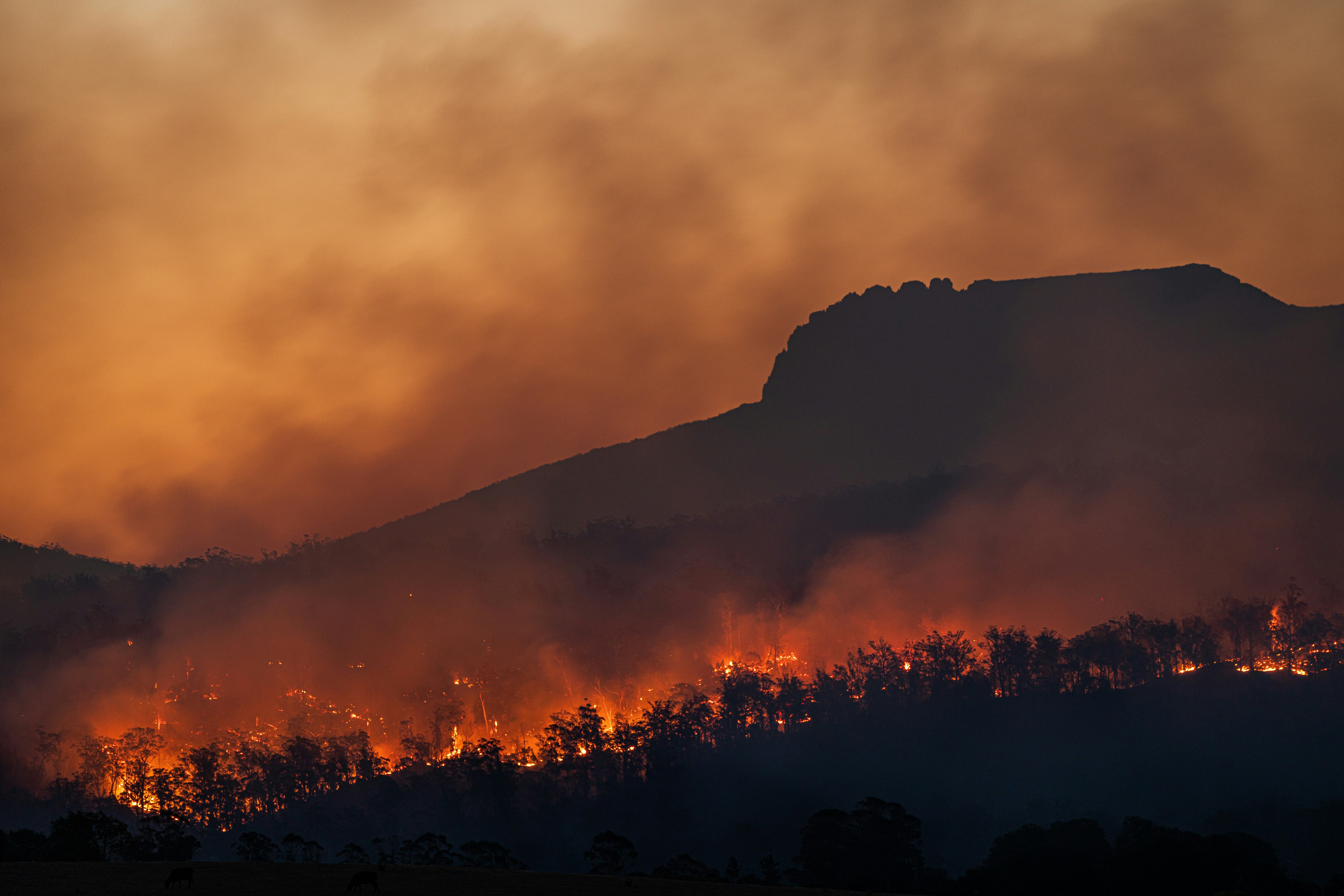
One insurer looks at your home and shrugs. The next one calls the same address a wildfire risk, raises your price, or declines to renew. Nothing about your house changed, so why did the answer change? As this publishes in August 2026, more than 6.4 million acres have burned nationwide, the country is at the highest wildfire preparedness level, and a lot of families are watching their premiums climb, so this is worth understanding clearly and calmly.
Did one carrier suddenly call your home a wildfire risk?
Another insurance company may evaluate the exact same address differently. Trailstone can compare your options across more than 40 A-rated carriers.
Here Is the Short Answer
There is no single official "fire zone" list that every insurance company shares. Each carrier decides on its own whether your home is a wildfire risk, and they reach different conclusions because they use different tools and draw the line in different places.
- They use different risk models. One carrier may buy its wildfire score from one company, and the next carrier may buy it from a competitor, or build its own.
- They set different cutoffs. Even when two carriers use the same score, one may treat a given number as acceptable and the other may treat that same number as too risky.
- They score at the address level. Two homes on the same street can receive very different scores based on slope, vegetation, roof, and access.
- They have different appetites. A non-renewal is often a business decision to reduce exposure in a region, not a judgment that something is wrong with your specific home.
The practical takeaway: because carriers disagree, the smartest move is to shop the disagreement in your favor. An independent agency with access to more than 40 carriers can find the one whose model and appetite fit your exact address. That is the entire point of this article, and we will get there.
What Insurers Are Actually Measuring: Three Different Things People Lump Together
Most of the confusion comes from a single mix-up. "ISO ratings," "fire scores," and "Firewise" get talked about as if they are one thing. They are not. Two of them measure completely different risks, and the third is a program you can join. Once you separate them, the whole picture gets simpler.
1. The ISO Public Protection Classification (your fire department, not your wildfire risk)
The ISO Public Protection Classification, often called the "ISO fire score," is a rating from 1 to 10, where 1 is best. It is produced by the Insurance Services Office, a Verisk company. It measures how well your community can put out a structure fire, based on your fire department's staffing, training, and equipment, the local water supply, emergency communications, and community risk reduction efforts.
Distance matters here. As a general rule, a home more than five road miles from a responding fire station is rated Class 10, and hydrant proximity within about 1,000 feet helps the classification. Many insurers use the PPC when pricing home insurance, though not all do.
Here is the key point most people miss: the ISO score is about fighting a house fire, not about wildfire. Verisk itself explains that improving one does not improve the other. A home in an excellent Class 2 community can still be surcharged or non-renewed because of a high wildfire score. If you only remember one thing from this section, make it that.
2. Wildfire risk scores (this is the "fire zone" number that drives most decisions)
Separate from the ISO score, carriers use a property-level wildfire risk score. This is the number that usually decides whether you are in what people casually call a "fire zone." These scores predict how likely your specific property is to burn in a wildfire, using factors like nearby fuel (grass, brush, trees), slope, road access, vegetation, ember exposure, and the home's own construction.
There is no single wildfire score. There are several competing ones, each with its own scale and its own recipe:
| Scoring System | What It Measures | Scale | Who Runs It |
|---|---|---|---|
| ISO Public Protection Classification (PPC) | Community ability to fight a structure fire. Not a wildfire measure. | 1 to 10, where 1 is best | Insurance Services Office (a Verisk company) |
| Verisk FireLine | Wildfire risk from fuel, slope, and road access | 0 to 30 (0 negligible, 1 low, 2 to 3 moderate, 4 to 12 high, 13 to 30 extreme) | Verisk |
| CoreLogic Wildfire Risk Score | Wildfire risk from terrain, slope, vegetation, and fire history | 1 to 100 (higher is riskier) | CoreLogic |
| ZestyAI Z-FIRE | Wildfire likelihood and damage probability using aerial imagery and machine learning | Property-level model output | ZestyAI |
| First Street Fire Factor | Wildfire exposure, often seen on real estate listings | 1 to 10 (higher is riskier) | First Street Foundation |
Look at that table for a second. A FireLine score of 8 and a CoreLogic score of 8 are not the same thing, because the scales run to 30 and to 100. Two carriers can each say your home is "high risk" and mean two different numbers on two different rulers. That alone explains a lot of the confusion.
One more note on transparency. These are proprietary models, so you usually cannot see exactly how your score was calculated. That is changing in some places, and we cover your right to ask for and challenge your score below.
One wildfire score does not tell the whole story.
Different carriers can use different models, thresholds, and underwriting rules for the same address. Comparing carriers can uncover options a single-company quote cannot.
3. Firewise USA and home-hardening designations (things you can join)
Firewise USA is a national recognition program run by the National Fire Protection Association. Neighborhoods that work together on wildfire mitigation can earn Firewise status, and some carriers offer a credit or greater willingness to write in recognized communities.
There is also the IBHS Wildfire Prepared Home designation from the Insurance Institute for Business and Home Safety, which is a property-level standard rather than a neighborhood one. We explain both in the mitigation section, because these are levers you actually control.
So Why Do Two Carriers Disagree About the Same House?
Now that the three ideas are separated, the disagreement makes sense. Here are the real reasons two companies reach different conclusions about the identical address.
Reason 1: They are reading from different models
One carrier may license FireLine, another CoreLogic, another Z-FIRE, and another may run its own in-house model. Each model weighs fuel, slope, access, vegetation, and construction a little differently, so the same house can land in a different band depending on which model is asking.
Reason 2: They draw the line in different places on the same model
Even when two carriers use the exact same score, they choose their own cutoff for what they will accept. On a scale like FireLine, one company might decide that anything above a 6 is too risky, while another company is comfortable up to a 10. Same house, same score, two different answers, purely because of where each carrier drew its line.
Reason 3: They score your address, not your ZIP code
Modern wildfire models work at the individual-property level. Slope, the vegetation touching your home, your roof material, and whether your road is a dead end can all move the number. That is why two neighbors can get different results, and why a public map that colors a whole area "high risk" does not always match what a carrier's model says about your specific lot.
Reason 4: Some carriers do not use the same inputs at all
Not every company uses the ISO score, and not every company uses the same wildfire model. As of 2026, State Farm is a well-known example of a carrier that relies on its own fire metrics rather than the ISO Public Protection Classification. Because Trailstone does not have access to State Farm, we mention it only to make the point that carriers genuinely evaluate fire differently from one another. Please treat any single carrier's approach as something to verify at the time you shop, because these practices change.
Reason 5: Appetite, capacity, and cost pressure
Sometimes the disagreement has little to do with your home and everything to do with the carrier's business. A company that already insures many homes in your area may pull back to limit its total wildfire exposure. Reinsurance costs, catastrophe losses, and state rate filings all push carriers to tighten or loosen at different times. A non-renewal in these cases reflects a portfolio decision, not a defect in your property.
Received a big increase or non-renewal?
That decision may reflect one carrier's appetite rather than a problem with your home. Before accepting it, see how other insurers evaluate your address.
A real-world illustration: Oregon
Oregon shows how tangled this gets. The state built a statewide wildfire hazard map, then repealed it in 2025 with Senate Bill 83 after strong pushback, and a 2023 law already barred insurers from using that state map to raise rates or cancel policies. Even so, carriers kept using their own private wildfire models, and some rural homeowners still saw increases or non-renewals. The lesson: a government map is not the same as a carrier's model, and banning the map does not stop the private models from reaching their own conclusions.
What "Fire Zone" Pressure Looks Like in 2026
This is not a quiet year. According to the National Interagency Fire Center, more than 6.4 million acres had burned nationwide by mid-August 2026, roughly 154 percent of the ten-year average, with the country at National Preparedness Level 5, the highest level. There were dozens of uncontained large fires at the same time, with the Northwest the most active region.
That pressure shows up on renewal notices. Across the West, homeowners in and near the wildland-urban interface are seeing tighter underwriting, higher wildfire deductibles, and more non-renewals, including for people who have never filed a claim. The table below summarizes the wildfire insurance landscape across the seven states Trailstone serves. Treat it as an informational snapshot, and know that details change quickly.
| State | Wildfire Exposure | Notable 2026 Development | What It Means for You |
|---|---|---|---|
| Colorado | High in foothills, mountains, and open-space edges | FAIR Plan operating since April 2025. House Bill 25-1182 lets you see and challenge your wildfire score, effective July 1, 2026. Reported premium increases of roughly 58 percent over recent years. | A last-resort option exists, and you now have the right to demand your score and appeal it. |
| Arizona | High in forested high country, plus monsoon flash flood elsewhere | Standard carriers still writing, with tighter terms in high-country and interface areas. | Shop early and document mitigation before renewal in higher-elevation zones. |
| Utah | Moderate to high in the wildland-urban interface | House Bill 48 adds wildland-urban interface fees of roughly $20 to $100 for 2026 and 2027, plus a new state wildfire risk map. Reported premium increases of roughly 59 percent over recent years. | Check your state risk score, and expect insurers to reassess at renewal. |
| Oregon | High, with recent history of large, fast-moving fires | Statewide wildfire hazard map repealed in 2025. State law bars insurers from using that state map for rating, but carriers still use their own models. | Your private-model score still matters even though the state map is gone. |
| Washington | Moderate to high east of the Cascades | IBHS Wildfire Prepared Home designation now available in the state. A proposed retrofit grant pilot stalled in the 2026 session. | A recognized home-hardening path exists that carriers increasingly reward. |
| Idaho | Moderate to high, especially near forest and rangeland | Reported 27,798 non-renewals in 2023, a sign underwriting can tighten quickly. | Do not assume affordable equals stable. Lock in coverage and mitigate. |
| Kansas | Grassland and wildland fire risk, alongside heavier tornado and hail exposure | Wildfire is a smaller share of the risk story than wind and hail, but grass fires are real. | The same coverage-structure questions apply. Confirm your perils and deductibles. |
The Coverage Options When Standard Carriers Say No
You asked us to explain the coverage forms too, because this is where people get surprised. Not every fire policy is built the same way. It helps to picture a ladder, from the broadest protection at the top to the narrowest at the bottom.
Rung 1: A standard homeowners policy (fire is already included)
On a standard homeowners policy, usually an HO-3, fire, including wildfire, is a covered peril. It is not billed separately. This form also covers your dwelling at replacement cost, your belongings, liability, and loss of use. This is the coverage you want to keep if you possibly can, because it is the most complete.
Rung 2: A standard policy with a wildfire deductible or a wildfire exclusion
In higher-risk areas, some carriers keep writing but change the terms. That can mean a separate, higher wildfire deductible, or in some cases a specific wildfire exclusion, which means wildfire damage is carved out and you would need a separate solution for it. This is exactly why you should read your declarations page and endorsements at every renewal, not just the premium line.
Do you know how your policy handles wildfire?
A lower premium can hide a higher wildfire deductible, an exclusion, or a change in how your home is valued. Trailstone can review the details with you.
Rung 3: A fire-only policy or a state FAIR Plan, paired with a DIC policy
When the standard market declines, many homeowners land on a fire-only policy, often through a state FAIR Plan, which stands for Fair Access to Insurance Requirements. A FAIR Plan is a last resort. It typically covers fire and a short list of basic perils, and it usually leaves out liability, theft, and water damage. It can also pay on an actual cash value basis and cap the amount, rather than paying full replacement cost.
Colorado is a clear example. The Colorado FAIR Plan began operating in April 2025 for owners who have been declined by the standard market, generally after three declinations. It caps coverage at $750,000, pays on an actual cash value basis, and does not cover the contents inside the home. In many neighborhoods, that cap is well below the real cost to rebuild.
Because a fire-only policy leaves big gaps, homeowners usually pair it with a Difference in Conditions policy, known as a DIC. The DIC fills in the liability, water, theft, and other protections the fire-only policy leaves out. Put simply, fire-only plus DIC is an attempt to rebuild something close to a normal homeowners policy out of two separate pieces. It generally costs more and delivers less than a single standard policy, which is one more reason to fight to keep standard coverage first.
Rung 4: Excess and surplus lines (specialty carriers)
Between the standard market and the FAIR Plan sits the excess and surplus lines market, often called E and S. These are specialty carriers that write risks standard companies will not. They can be more flexible on tough homes, but policies are non-admitted, can carry higher premiums, and may include more exclusions and higher deductibles. For some high-risk homes, a well-structured E and S policy is a much better outcome than a bare fire-only plan.
A brief and honest caveat. This section is general education, not legal or coverage advice. The wording in your actual policy controls, so read your declarations page and endorsements, and ask your Trailstone agent, or an attorney for contract-specific questions, before you rely on any summary here.
What You Can Actually Do to Improve Your Standing
Here is the encouraging part. Your wildfire score is not fixed like your birthday. A meaningful share of it comes from conditions at your address, and many of those you can change. Carriers increasingly reward documented mitigation, and in a growing number of cases they require it before they will write or renew.
Harden the home and clear defensible space
The highest-value steps focus on embers, which are the leading cause of home ignition during a wildfire. In plain terms:
- Protect the roof and the zone right next to the house. A Class A fire-rated roof and a noncombustible zone in the first 5 feet around the home matter more than almost anything else.
- Cover the vents. Ember-resistant vents keep burning debris from getting inside through gable, soffit, and foundation vents.
- Create defensible space. Clearing brush, dead vegetation, and stacked firewood away from the home slows a fire's approach.
- Keep gutters and the roof clear. Leaves and pine needles are ready fuel for landing embers.
Earn a designation carriers recognize
Two programs turn your effort into something an underwriter can see:
- IBHS Wildfire Prepared Home. This is a property-level standard from the Insurance Institute for Business and Home Safety, with a Base level focused on embers and a Plus level that adds protection against flames and radiant heat. As of 2026 it involves an application fee of about $125, a third-party review, and a designation that lasts three years with annual upkeep. The designation goes into a registry insurers can check, and it can reduce the risk of non-renewal.
- Firewise USA. This neighborhood program from the National Fire Protection Association recognizes communities that mitigate together, and some carriers offer credits or greater willingness to write in recognized areas.
One honest note about the math. Studies have found that the direct premium discount for mitigation is often small compared with the cost of a full retrofit. The bigger payoff is usually staying insurable at all, since some carriers will not write or renew without these steps in place.
Already invested in wildfire mitigation?
Your roof, defensible space, vents, and mitigation documentation may matter to underwriting. Make sure carriers actually see the improvements you have made.
Ask for your score, and challenge it if it is wrong
You increasingly have the right to see the score being used against you. In Colorado, House Bill 25-1182 requires insurers that use wildfire or catastrophe models to disclose information about them and gives homeowners a formal way to see and challenge their wildfire risk score, effective July 1, 2026. Even where no law requires it, you can ask any carrier which model it used and how to appeal, and you can support the appeal with documentation of your mitigation work.
Document everything and shop before you accept a bad answer
Photos of your defensible space, receipts for a new roof, and a designation certificate are the evidence that moves a file. Keep them organized. And when a renewal spikes or a non-renewal arrives, that is the moment to shop, not the moment to give up, because the next carrier may score you very differently.
Why Shopping More Than 40 Carriers Is the Real Answer
Bring the whole picture together and the strategy becomes obvious. Carriers disagree about wildfire risk on purpose, because each one uses its own model, its own cutoff, and its own appetite. If you are tied to a single company, you are stuck with that one company's opinion of your home. If your renewal reflects a carrier tightening its whole book in your region, you feel the full weight of a decision that was never really about you.
An independent agency changes the math. Trailstone has access to more than 40 A-rated carriers, which means we can take your exact address, your mitigation, and your documentation to many companies and find the one whose model and appetite actually fit. The disagreement that feels frustrating when you face it alone becomes leverage when someone can shop it on your behalf. We compete on process and on finding the right fit, not on rushing you a single quote.
This is also why a yearly check matters. Wildfire models update, carriers enter and exit markets, and new mitigation credits appear. What was the best fit last year may not be the best fit today.
One carrier's wildfire decision does not have to be the final answer.
Trailstone can compare your address across more than 40 A-rated carriers to find companies whose underwriting model and appetite better fit your home.
Frequently Asked Questions
Why does one company say I am in a wildfire zone and another does not?
Because there is no shared official list. Each carrier uses its own wildfire model and its own cutoff, and they score your specific address. Different tools plus different thresholds produce different answers for the identical home.
What is the difference between an ISO fire rating and a wildfire risk score?
The ISO Public Protection Classification, from 1 to 10, measures how well your community can put out a structure fire, based on the fire department, water supply, and communications. A wildfire risk score measures how likely your property is to burn in a wildfire. They are separate, and improving one does not improve the other.
If a public map shows my area as high risk, am I automatically uninsurable?
No. Public maps and carrier models are not the same thing. A carrier scores your individual lot, so your slope, roof, vents, and defensible space can produce a different result than a broad area map suggests.
Can I see and challenge my wildfire risk score?
Increasingly, yes. In Colorado, a 2026 law gives homeowners the right to see and appeal their wildfire score. Even without a law, you can ask any carrier which model it used and how to appeal, and support the appeal with documentation of your mitigation.
Does standard homeowners insurance cover wildfire?
Usually yes. On a standard homeowners policy, wildfire is a covered peril unless the policy specifically excludes it. In high-risk areas, watch for a separate wildfire deductible or, in some cases, a wildfire exclusion, so read your declarations page carefully.
What is a fire-only policy or FAIR Plan, and do I need a DIC with it?
A FAIR Plan is a last-resort, fire-only style policy for homes the standard market will not write. It typically leaves out liability, theft, and water, and may pay actual cash value with a coverage cap. Most homeowners pair it with a Difference in Conditions policy, a DIC, to fill those gaps.
Can a policy actually exclude wildfire?
Yes, in some higher-risk situations a carrier may carve out wildfire or apply a much larger wildfire deductible. If that happens, you need a separate plan for wildfire, which is where fire-only, DIC, and specialty options come in. This is exactly the kind of thing to review with your agent before you sign.
Does home hardening really lower my rate?
Sometimes the direct discount is modest, but the larger benefit is staying insurable. A number of carriers now want to see defensible space, a Class A roof, ember-resistant vents, and sometimes an IBHS Wildfire Prepared Home designation before they will write or renew.
I received a non-renewal. Does that mean something is wrong with my house?
Not necessarily. Many non-renewals reflect a carrier reducing its overall exposure in a region rather than a specific defect in your home. It is a signal to shop widely and to document your mitigation, not a verdict on your property.
How does working with an agency that has more than 40 carriers help?
Because carriers disagree, more options means more chances to find the company whose model and appetite fit your address. Instead of accepting one opinion, you get to compare many, which is especially valuable after a rate spike or a non-renewal.
Your Wildfire Insurance Checklist
- Pull your declarations page. Confirm wildfire is covered, and check for any separate wildfire deductible or exclusion.
- Ask for your wildfire score and the model used. Request the appeal process, and ask whether the carrier uses the ISO score, a wildfire model, or both.
- Complete and document mitigation. Defensible space, a Class A roof, and ember-resistant vents, then pursue IBHS Wildfire Prepared Home or Firewise where available.
- Protect replacement cost. Do not let a fire-only or actual cash value policy become your only line of defense if a fuller policy is available.
- Shop before you accept a big increase or a non-renewal. The next carrier may score you very differently.
- Schedule a complimentary Trailstone review. Get a written summary you can keep for your records.
Your Next Step
If your renewal jumped, if a carrier called your home a wildfire risk, or if you simply want to know where you stand before fire season peaks, let us take a look. Trailstone will run a complimentary review of your insurance across our more than 40 carriers and give you a written summary for your records, so you can see your real options in plain English.
Reach out to Trailstone through our website at www.trailstoneinsurance.com or give us a call. We will help you shop the disagreement in your favor and find the carrier whose view of your home fits your address, your mitigation, and your budget.
Do not accept one carrier's wildfire score as the only answer.
Get a complimentary Trailstone insurance review and a written summary of your options across our network of more than 40 A-rated carriers.
Written by Mark Rodgers, President and Founder, Trailstone Insurance Group
Topics:
