



If an Arsonist Burns Down Your Home, Are You Covered? Lessons From the Spokane Wildfires
September 29th, 2026
8 min. read
By Mark Rodgers
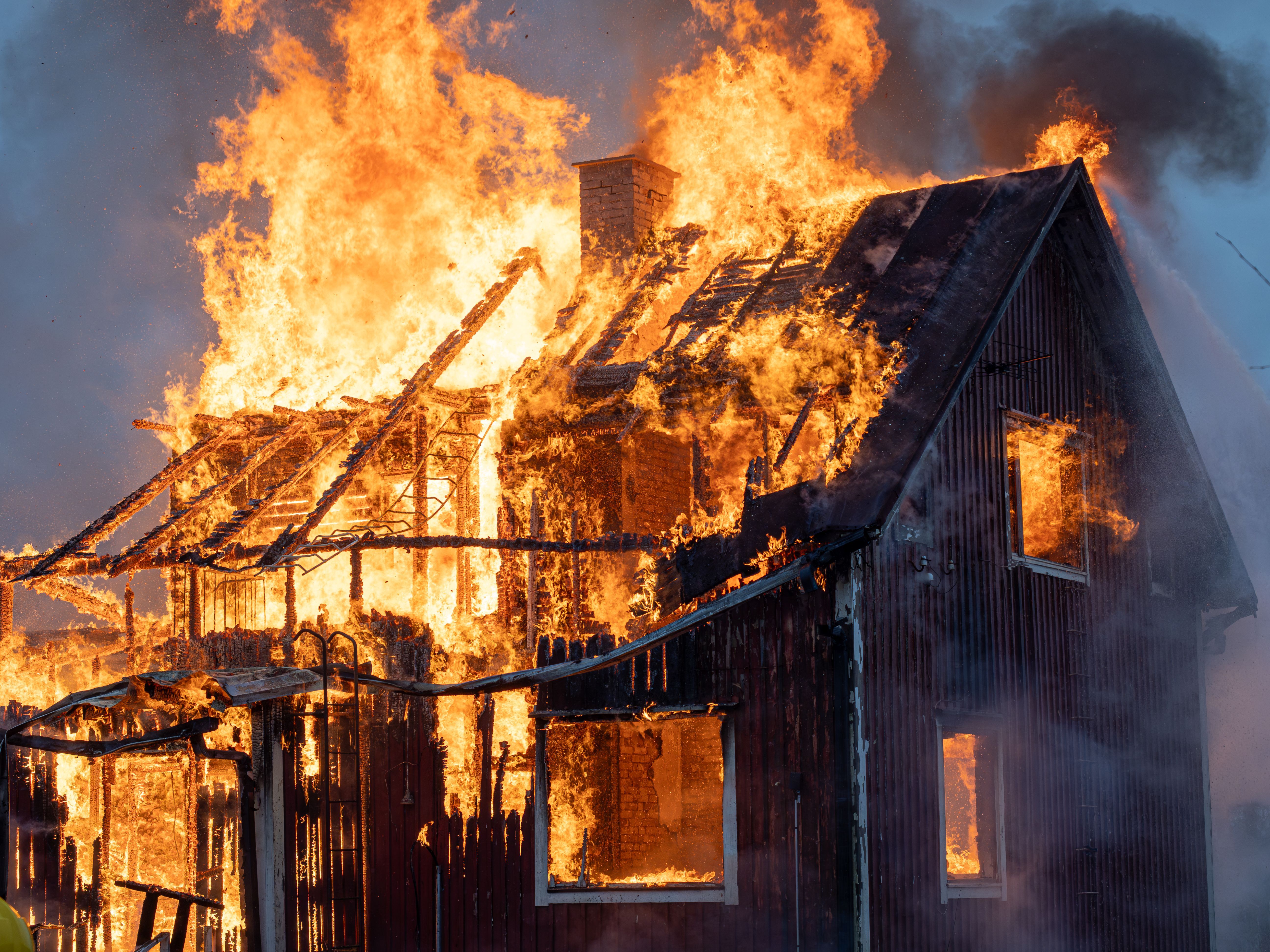
If an Arsonist Burns Down Your Home, Are You Covered? Lessons From the Spokane Wildfires
Written by Mark Rodgers, President and Founder, Trailstone Insurance Group
Picture a homeowner sitting on the couch, watching coverage of a wildfire that leveled an entire neighborhood in a single afternoon, then learning the fire was set on purpose. Two questions land at the same time: could that happen where I live, and if it did, would my policy even pay. This post answers both, walks through when homeowners insurance covers arson and when it does not, explains the coverage gap that quietly leaves most families short, and lays out the handful of steps that actually protect a house.
Not sure whether your home has enough wildfire protection?
Trailstone can review your dwelling limit, replacement cost protection, wildfire exposure, and policy gaps before you ever need to file a claim.
Here Is the Short Answer
If someone else sets the fire, including a wildfire that reaches your home, it is a covered loss. If you set it or arrange it, it is not. And whether you carry enough coverage to actually rebuild is a separate problem that turns out to be far more common than the fire itself.
- Arson by someone else is covered. Fire is a standard covered peril, and a criminal ignition does not change that.
- Arson by you, or at your direction, is not covered. That is the intentional-loss exclusion, and it is also fraud and a crime.
- Being underinsured is the bigger risk. After a recent urban wildfire, roughly three out of four households that filed claims did not have enough coverage to fully rebuild.
What Happened in Spokane, and Why It Matters Far Beyond Washington
On August 1, 2026, three wildfires broke out in and around Spokane, Washington, and are now managed together as the Spokane Area Fires. As of the morning of August 9, they had damaged or destroyed more than 900 structures, with 694 tied to the Old Trails Fire, 168 to the Autumn Lane Fire, and 59 to the Fairview Fire. Roughly 65,000 people were evacuated, and remarkably, no deaths or injuries were reported.
The largest of the three, the Old Trails Fire, is being prosecuted as arson. A suspect has been charged with several counts of first-degree arson, and investigators say the ignition was planned in advance for a day of high fire danger. The other two fires remain under investigation, so we are careful to say the largest fire is charged as arson, not that every fire that week was.
Here is the part that travels beyond Spokane. August is Washington's driest month, the region was already in drought, and winds were forecast between 20 and 50 miles per hour. One fire official put it plainly: no department in the country can stop a wind-driven event that size. When conditions line up like that, suppression is not what saves your house. What you did to the house beforehand is. That is true in dry, windy country anywhere, which is why this post is written for homeowners everywhere, not just our neighbors in Washington.
Live in wildfire country?
We can check whether your current home policy has the replacement cost, loss of use, and ordinance or law protection you would need after a major fire.
Does Homeowners Insurance Cover Arson?
This is one of the most common questions we get after any suspicious fire, and the honest answer is that it depends entirely on who set it. The dividing line is not the crime. It is whether the person who caused the loss is someone covered by your policy.
When Someone Else Sets the Fire, You Are Covered
Fire is a standard covered peril on a homeowners policy. If a stranger, a neighbor, or a criminal deliberately sets a fire that damages or destroys your home, that is a covered loss, the same as an accidental kitchen fire. The criminal origin does not reduce your coverage. So a homeowner whose house burned in a wildfire that an arsonist started miles away is dealing with a covered fire loss.
Your insurer may investigate the cause and origin, which is normal, and it may later go after the person who set the fire to recover what it paid you. That recovery effort is between the insurer and the arsonist. It does not come out of your settlement.
When You Set the Fire, You Are Not Covered
Every standard homeowners policy excludes intentional loss, meaning damage you cause on purpose. If you burn down your own home, hire someone to do it, or direct a family member to do it, the claim is denied. On top of the denial, that conduct is insurance fraud and a crime. The burden sits with the insurer to prove the fire was set by the insured, which is why suspicious fires can involve a fire marshal, a cause-and-origin review, and detailed questioning.
The Tricky Middle: When a Household Member Sets the Fire
Here is the wrinkle most people have never heard of. Imagine an estranged spouse sets fire to a jointly owned home, and the other spouse had nothing to do with it. Can the innocent co-owner still collect? The answer depends on two things: the exact wording of the policy, and the law in your state. Some policies and jurisdictions protect a truly innocent co-insured, while others may apply the exclusion more broadly. This is exactly the kind of situation where you want to talk with your agent and, for a live dispute, a licensed attorney.
| Who Started the Fire | Typically Covered? | What to Know |
|---|---|---|
| An accidental fire | Yes | Fire is a standard covered peril. |
| A wildfire set intentionally by a stranger | Yes | The criminal origin does not change the fact that it is a covered fire loss. |
| A stranger or neighbor deliberately torches your home | Yes | The insurer may later pursue the person responsible. |
| You, the policyholder | No | Intentional loss is excluded and may constitute insurance fraud. |
| Someone you hired or directed | No | Treated the same as if you caused the intentional loss yourself. |
| A household member or co-insured without your involvement | It depends | The outcome depends on policy wording and state law. |
A note from Mark: coverage disputes involving arson, and the innocent co-insured question in particular, are decided under your specific policy language and your state's laws, and they sometimes end up in court. This article is general education, not legal advice. For a live situation, please talk with a licensed attorney.
The Bigger Risk Most Homeowners Never See: Being Underinsured
Whether a fire is accidental or set on purpose, the families who struggle most afterward usually share the same problem. They were underinsured and did not know it. After the Marshall Fire in Colorado, which destroyed more than 1,000 homes, researchers at the University of Colorado studied nearly 5,000 households that filed claims. They found that 74 percent were underinsured, and 36 percent were severely underinsured, meaning their coverage was less than 75 percent of what it actually cost to rebuild.
The detail that stops people cold is this: 83 percent of those policies already carried extended replacement cost coverage, and it still was not enough. Rebuilding costs jump after a disaster because everyone in the burn area is hiring the same contractors and buying the same materials at the same time. Your home's market value and its rebuild cost are two different numbers, and your policy is trying to match the rebuild cost, not the price you paid.
A few coverage features make the difference between a smooth rebuild and a painful shortfall. Extended or guaranteed replacement cost gives you a cushion above your dwelling limit when construction prices spike. Ordinance or law coverage pays for code upgrades required when you rebuild an older home. Loss of use coverage pays for temporary housing while you rebuild.
Would your current policy fully rebuild your home today?
Trailstone can review your Coverage A limit, extended replacement cost, ordinance or law coverage, and loss of use protection.
What Actually Saves a House: Home Hardening
Since suppression cannot stop a wind-driven fire, the goal is to make your home the one that does not ignite. The single most important fact from wildfire research is that embers, not the wall of flame, are the leading cause of home ignition, and they can travel miles ahead of the fire front. That means the fight is won or lost in the details of your roof, your vents, and the first few feet around your foundation.
The Insurance Institute for Business and Home Safety runs a Wildfire Prepared Home program built on exactly this research, and the designation is available to Washington homeowners. The steps are practical, and several are do-it-yourself weekend projects.
- Clear the first 5 feet around your home. Replace bark mulch and wood with rock, hardscape, or bare soil so embers have nothing to catch.
- Install ember-resistant vents. Embers can enter attics and crawlspaces through standard vents.
- Move to a Class A fire-rated roof. Asphalt shingles, tile, slate, and metal can qualify, depending on the product and assembly.
- Maintain defensible space. Keep leaves and needles off the roof and out of gutters, and move flammable material away from the structure.
These upgrades can also influence underwriting and, with some carriers, premium credits. The exact amount varies by carrier and state, so always confirm what applies to your policy.
| Home-Hardening Step | Typical Premium Impact | Notes |
|---|---|---|
| Class A fire-rated roof | 10 to 20 percent lower | Credits vary by carrier and state. |
| Ember-resistant vents | 5 to 15 percent lower | Helps close a major ember entry point. |
| Defensible space and a clear Zone 0 | 5 to 10 percent lower | The first 5 feet around the structure matter most. |
| Full IBHS Wildfire Prepared Home designation | Up to 20 percent lower | Availability and credits vary by participating carrier. |
The good news for anyone on a budget is that some of the highest-impact steps, such as ember-resistant vents and creating a clear Zone 0, can be relatively affordable compared with the cost of a total loss.
Have you hardened your home against wildfire?
Documented roof, vent, and defensible-space improvements may help with both insurability and available carrier credits.
Frequently Asked Questions
Does homeowners insurance cover arson?
It depends on who set the fire. If someone other than you deliberately set it, the damage is generally covered as a fire loss. If you set it, or hired or directed someone to, the claim is denied because intentional loss is excluded, and that conduct may also constitute fraud and a crime.
Am I covered if a wildfire started by an arsonist miles away burns my home?
Yes. A wildfire that spreads to your property is generally treated as a covered fire loss, and the fact that someone intentionally started the fire elsewhere does not normally change that coverage.
What if a family member or co-owner set the fire and I had nothing to do with it?
This is the innocent co-insured question, and the answer depends on your exact policy wording and your state's law. Some policies and states protect the innocent party while others apply the exclusion more broadly.
Will the insurance company investigate my fire claim?
For a large or suspicious fire, often yes. A cause-and-origin review is a normal part of the process.
How do I know if I have enough coverage to actually rebuild?
Look at your dwelling limit, called Coverage A, and ask whether it reflects today's rebuild cost rather than your home's market value or purchase price. Then confirm whether you carry extended or guaranteed replacement cost and ordinance or law coverage.
What is the single most effective thing I can do to protect my home from wildfire?
Clear the first 5 feet around your home so embers have less combustible material to ignite. Ember-resistant vents are another high-value improvement.
Do home-hardening upgrades lower my premium?
Sometimes. Many carriers offer credits or more favorable underwriting for improvements such as a Class A roof, ember-resistant vents, defensible space, and wildfire-prepared certifications. The exact benefits vary by carrier and state.
How does a careful homeowner still become underinsured?
Rebuild costs can rise faster than policy limits, especially after a regional disaster when contractors and materials are in short supply. Annual replacement cost reviews help reduce that risk.
Your Next Steps
- Pull your declarations page and check that your Coverage A dwelling limit looks like a rebuild number, not a purchase price.
- Ask about extended or guaranteed replacement cost and ordinance or law coverage so a total loss does not create an unexpected shortfall.
- Clear the first 5 feet around your home and reduce combustible material close to the structure.
- Add ember-resistant vents and plan for a Class A roof when your roof needs replacement.
- Build or update a home inventory so you can document what you owned after a loss.
- Schedule a coverage review so your limits and endorsements are checked before you need them.
At Trailstone, we run a process called TRAC, the Trailstone Risk Assessment and Comparison, that measures your coverage against your real rebuild cost and shops it across more than 40 A-rated carriers. That matters in wildfire country. When a single carrier tightens or steps back from a high-risk area, an independent agency can still compare other available options.
Want to know where your wildfire coverage really stands?
Trailstone will provide a complimentary review of your home insurance and a written summary of your coverage, limits, and available options.
This article is educational and is not legal advice. Coverage disputes involving intentional acts and co-insureds depend on your policy language and state law. For a live dispute, consult a licensed attorney.
Written by Mark Rodgers, President and Founder, Trailstone Insurance Group
```Topics:
